


VA Rating for Back Pain: Understanding VA Evaluation Criteria
According to the Veterans Administration, almost 13 million veterans are service connected for orthopedic conditions, with back pain representing one of the most prevalent disabilities among those who served. Understanding how the VA evaluates and assigns a VA rating for back pain can be the determining factor between minimal compensation and the full benefits a veteran has earned through military service. This article outlines how the VA rating system works, which measurements carry the most weight, and what role comprehensive medical documentation plays in accurate evaluation.
Understanding How the VA Rates Back Pain
The VA does not evaluate back pain based on subjective pain descriptions alone. The rating schedule relies on measurable, clinical data — specifically, the degrees of spinal movement documented during evaluation — under Diagnostic Code 5237, which covers lumbosacral and cervical strain. Understanding what determines a VA rating beyond the presence of pain is foundational to understanding why functional measurements become the central factor in the VA’s evaluation.
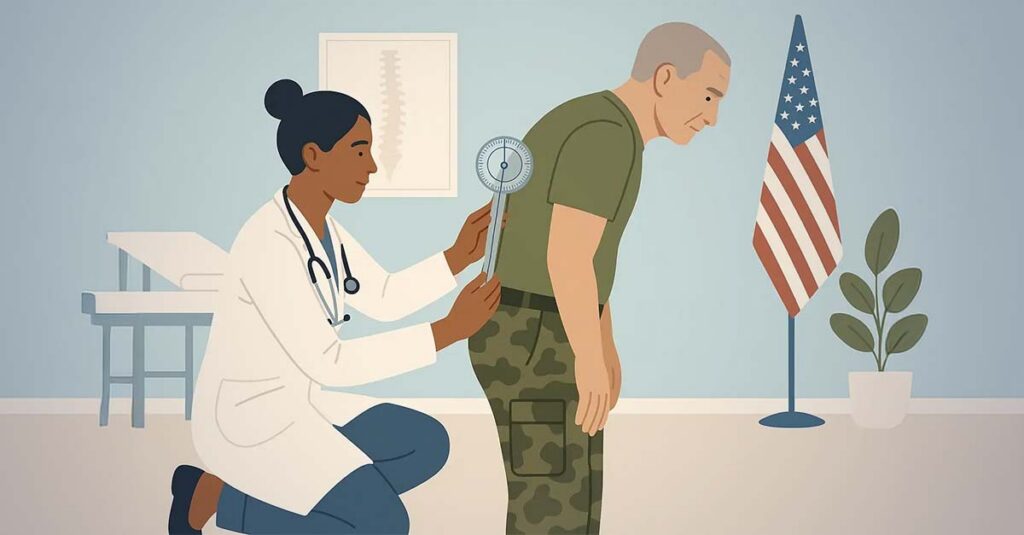
The Science Behind VA Spine Evaluations
The VA assigns ratings under Diagnostic Code 5237 ranging from 10% to 100%, with each tier corresponding to specific degrees of spinal range of motion rather than reported pain intensity. The VA evaluates the degrees to which a veteran can flex forward, backward, and laterally — along with functional limitations such as the ability to sit for extended periods or lift objects. Pain descriptions serve a supporting role in the record, but clinical measurements anchor the rating determination.
Why Range of Motion Measurements Matter More Than Pain Descriptions
The VA uses goniometers — instruments that measure joint angles — to document spinal movement in multiple directions during evaluations. These measurements are applied to the VA’s rating formula to determine the appropriate disability percentage. Pain descriptions are relevant to the overall clinical picture but do not replace or override objective range of motion data in the rating determination.
Recent developments in VA policy may also affect veterans with back pain who develop secondary mental health conditions. As Hill & Ponton reports, “There is a proposal to change the rating criteria for mental health conditions, which could result in higher ratings for veterans with severe symptoms,” though these changes are not yet in effect and timing remains unclear.
Forward Flexion of the Thoracolumbar Spine: The 30-Degree Threshold
There is a critical measurement in VA back pain evaluations that significantly influences rating outcomes: forward flexion of the thoracolumbar spine 30 degrees or less. This single data point frequently determines whether a veteran receives a moderate rating or moves into a higher compensation bracket. Normal forward flexion is approximately 90 degrees, meaning a measurement at or below 30 degrees reflects the loss of roughly two-thirds of standard spinal mobility.
The 30-Degree Threshold That Affects Rating Outcomes
When clinical documentation reflects forward flexion of the thoracolumbar spine 30 degrees, the VA typically assigns a 40% disability rating under the applicable diagnostic code. This measurement corresponds to functional limitations in everyday activities such as bending, lifting, and sustained physical effort. Veterans with forward flexion of the thoracolumbar spine 30 degrees or less generally fall within the criteria for the 40% rating, which represents a substantial increase in monthly compensation compared to lower-tier ratings.

To illustrate how this measurement affects outcomes: consider veteran John, who injured his back during a training exercise. His initial C&P exam documented 35 degrees of forward flexion, and the VA ultimately assigned a 20% rating. When his condition progressed and a follow-up evaluation documented forward flexion of the thoracolumbar spine 30 degrees, the VA assigned a 40% rating — with monthly compensation rising from $346.95 to $774.16.
The Role of Comprehensive Medical Documentation
The VA may schedule a Compensation & Pension (C&P) examination to review a veteran’s current condition. The significance of medical evidence in VA disability claims is well-established — thorough independent documentation completed prior to the VA’s own review can prevent the need for additional medical clarification later in the process. Independent medical evaluations and DBQs completed before this stage support the VA’s ability to clearly understand the full scope of a veteran’s functional limitations.
The following categories of documentation are commonly part of the VA’s evidence review in back pain cases:
- Current spine imaging (X-rays or MRI results)
- Range of motion measurements from a qualified physician
- Functional capacity evaluations, where available
- Current treatment records and medication history
- Objective clinical opinions connecting the current condition to military service
- Statements from fellow service members or family members describing observed limitations
When the Spine Is Fused: Ankylosis Ratings Explained
Ankylosis refers to the fusion or extreme stiffening of the spine. The VA classifies ankylosis as either favorable or unfavorable based on the position in which the spine has fused. The clinical distinction between favorable ankylosis and unfavorable positioning directly influences the disability rating assigned.
Favorable vs. Unfavorable: How Position Affects Rating
Favorable ankylosis indicates that the spine has fused in a position that permits reasonable functional activity in daily life. Cases involving unfavorable ankylosis of the entire thoracolumbar spine, by contrast, can result in the maximum 100% disability rating, as this condition severely limits the ability to work, drive, or perform basic physical tasks. The VA’s evaluation centers not only on the presence of spinal fusion but on how that fusion affects overall physical functioning.
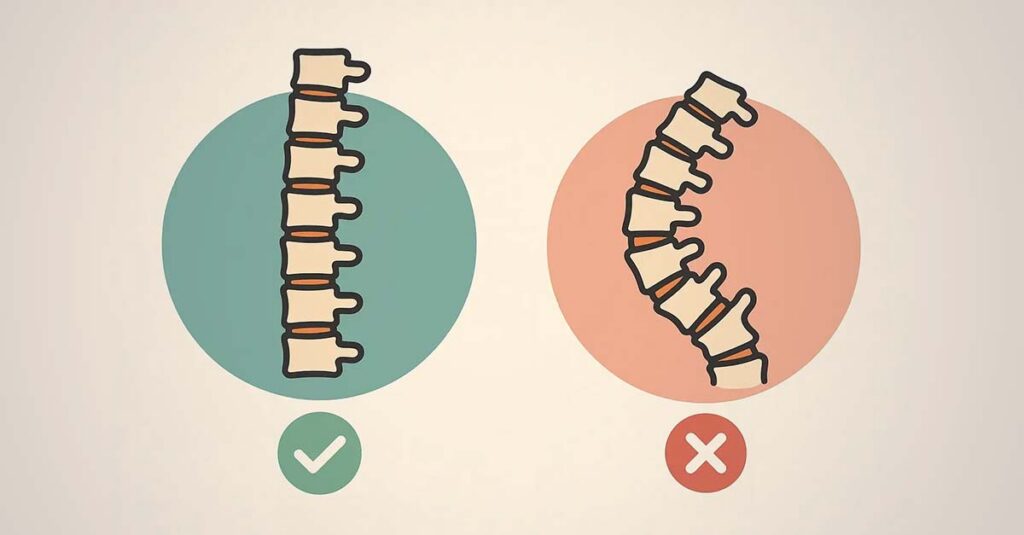
Documenting the Full Impact of Spinal Fusion
Accurate rating of ankylosis requires comprehensive imaging — including X-rays, MRIs, and CT scans — that clearly establishes the extent and anatomical location of the fusion. Equally important is documentation of how the fusion affects daily life, including the ability to rotate the neck while driving, reach overhead, or maintain employment requiring physical activity. Veterans with favorable ankylosis may still receive significant ratings when functional limitations are thoroughly reflected in the medical record.
What Rating Percentage Is Realistic?
The average VA disability rating for back pain falls between 10–30%, with approximately 20% being the most common outcome, according to Hill & Ponton. This average VA disability rating for back pain reflects that many veterans experience range of motion limitations significant enough to exceed the 10% threshold but not severe enough to meet the criteria for higher ratings.
Common Rating Scenarios by Functional Limitation
The VA disability rating for lower back pain follows patterns tied directly to specific functional measurements:
- 10% ratings typically correspond to documented back strain with minimal functional limitations
- 20% ratings generally involve measurable range of motion loss and intermittent symptoms that affect work capacity
- 40% ratings usually require significant movement restrictions, often including forward flexion at or below 30 degrees
- 60–100% ratings are assigned in severe cases involving ankylosis, multi-region spinal involvement, or complete functional incapacitation
The following case illustrates how secondary conditions can affect a combined rating: Maria, a veteran who developed chronic back pain from the physical demands of her service, had her C&P exam document 45 degrees of forward flexion and muscle spasms producing abnormal gait. The VA ultimately assigned a 20% rating. When secondary depression developed as a result of chronic pain limiting her activities, her combined rating increased to 50%.
Accurate Expectations Within the Rating System
The VA determines ratings based on the specific functional limitations documented in the medical record, not on the severity of the condition as perceived by the veteran. Cases in which medical evidence thoroughly and objectively reflects how a back condition affects work, daily activities, and quality of life are more likely to be evaluated with accuracy. Individual outcomes vary significantly based on the specific facts and evidence in each case.
Filing an Initial Back Pain Claim: What the VA Reviews
A claim for a VA rating for back pain requires three foundational elements: a current diagnosis, evidence of an incident or injury during military service, and an objective clinical opinion connecting the current condition to service. The third element — establishing the medical relationship between the current diagnosis and service — is frequently where documentation gaps occur, particularly for veterans whose back conditions developed gradually rather than from a single identifiable injury.

The Medical Evidence Foundation
The VA reviews current medical evidence alongside service medical records. Recent examinations documenting current range of motion, imaging studies reflecting structural findings, and independent medical opinions connecting the current diagnosis to military service all contribute to the completeness of the evidentiary record. Awareness of common VA disability filing mistakes is valuable context for veterans navigating this process, as documentation gaps can affect outcomes at the evaluation stage.
The VA’s review of back pain claims typically encompasses the following categories of evidence:
Current Medical Evidence:
- Recent spine imaging (within 12 months)
- Range of motion measurements from a qualified physician
- Functional capacity evaluation, if available
- Current treatment records and medication history
Service Connection Evidence:
- Service medical records referencing back pain or injury
- Incident reports or documentation of relevant service events
- Military occupational descriptions reflecting physical demands
- Statements from fellow service members
Clinical Opinion Evidence:
- Independent medical opinion connecting the current condition to service
- Physician statement on causation or aggravation
- Timeline reflecting progression from service to present diagnosis
Supporting Evidence Beyond Medical Records
Statements from fellow service members who witnessed the events that contributed to a back condition — or who can attest to how the condition has progressed since service — contribute additional context to the evidentiary record. Family member statements describing how a back condition affects daily functioning and relationships also serve as relevant supporting documentation in the VA’s review.
When Back Conditions Worsen: Increase Claims
Back conditions frequently deteriorate over time, and the VA provides a pathway for veterans to request a rating increase when that progression is reflected in updated medical evidence. According to the VA, veterans who believe their rating no longer reflects the current severity of their condition may submit additional medical evidence when requesting a review. A successful increase claim reflects measurable change in the clinical record — decreased range of motion compared to prior evaluations, new symptoms, or increased functional limitations that affect work capacity.
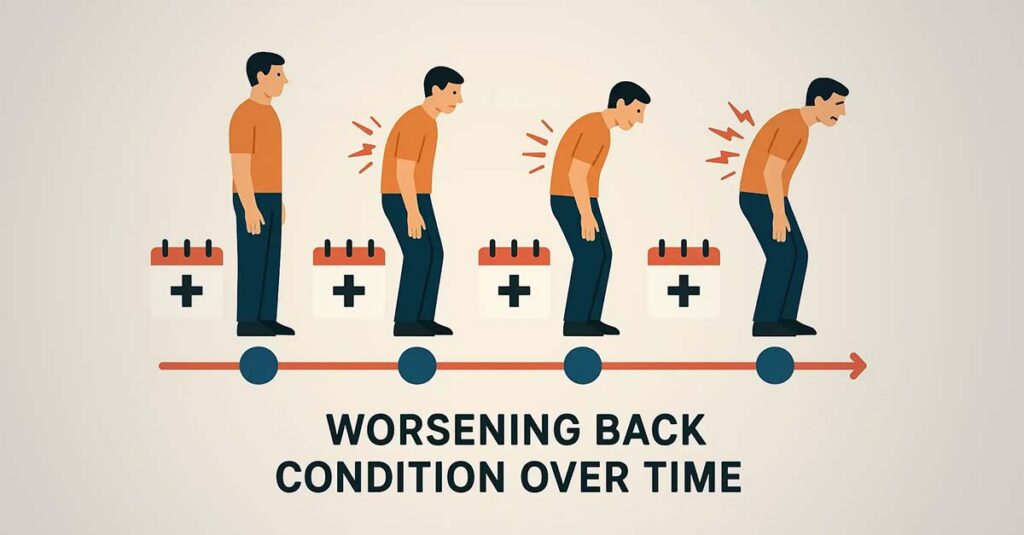
Documenting Progressive Worsening
A clear clinical record showing how a condition has declined since the last rating is central to the VA’s evaluation of increase claims. Consistent medical care and ongoing documentation of new limitations as they develop contribute to a record that accurately reflects the evolving severity of a back condition. Understanding the process for how to properly request a VA disability rating increase with appropriate supporting documentation is an important consideration for veterans whose conditions have progressed.
Timing of Increase Claims
The VA evaluates the overall trend in a veteran’s condition rather than a single examination snapshot. Sustained worsening documented across multiple clinical visits reflects a more complete picture of progression than isolated episodes. Under VA rules, the effective date for a rating increase is tied to when the claim is filed, making the timing of a filing relevant to when updated benefits may begin.
Secondary Conditions That Can Affect Overall Ratings
Back pain frequently causes or aggravates other medical conditions. These secondary conditions may qualify for separate disability ratings, potentially affecting a veteran’s combined overall rating. Establishing the medical relationship between the secondary condition and the service-connected back condition is central to the VA’s evaluation.
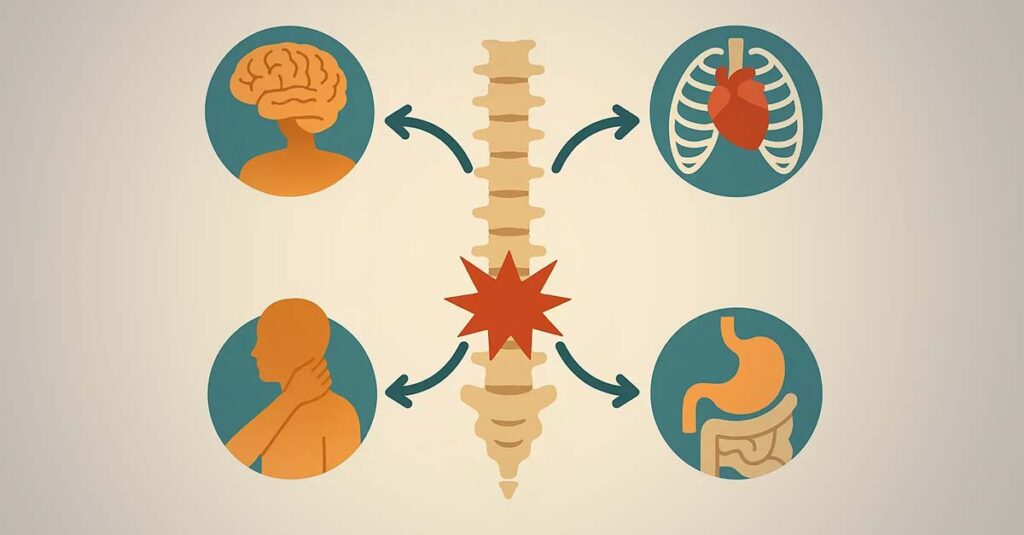
Mental Health Impacts of Chronic Back Pain
Depression, anxiety, and sleep disorders are documented secondary conditions that can develop in connection with chronic back pain. The persistent nature of pain, limitations on previously enjoyed activities, and effects on employment capacity are factors the VA considers when evaluating mental health conditions claimed as secondary to a back condition. The VA evaluates each secondary condition based on its own diagnostic criteria, separately from the primary back condition.
Physical Secondary Conditions Throughout the Body
Compensatory movement patterns resulting from back pain can place stress on other anatomical structures, including the hips and knees. Reduced mobility may contribute to muscle deconditioning, and sleep disruption from pain can affect systemic health. Even veterans with favorable ankylosis may develop compensatory issues in adjacent body parts due to altered movement patterns. Each of these secondary conditions may qualify for its own disability rating when the clinical relationship to the primary back condition is reflected in the record.
To illustrate the potential impact of secondary conditions: Robert, a veteran with a 40% service-connected rating for back pain, developed severe depression after years of chronic pain limited his ability to participate in family activities. His treating psychiatrist provided a clinical opinion connecting the depression to his back condition. The VA ultimately assigned an additional 70% rating for depression, bringing his combined rating to 80% and his monthly compensation from $774.16 to $2,044.89.
Secondary Condition Claims: The Role of Clinical Documentation
Secondary condition claims are evaluated on the strength of the independent medical opinions and clinical documentation in the record. Medical records that clearly reflect the causal or aggravating relationship between the back condition and the secondary diagnosis allow the VA to assess the full scope of a veteran’s overall health picture.
Complex Cases: TDIU and Multiple Spinal Region Issues
Some back pain cases present considerations that require additional evaluation under VA rules. Total Disability Individual Unemployability (TDIU) allows veterans to receive 100% compensation even when scheduler ratings fall below that threshold, provided the conditions prevent substantially gainful employment. Additionally, separate spinal regions — specifically the cervical spine (neck) and thoracolumbar spine (mid and lower back) — may be rated independently when both areas have service-connected conditions.
When Back Pain Prevents Employment
TDIU eligibility under VA rules generally requires either a single condition rated at 60% or higher, or a combined rating of 70% with at least one condition at 40%. The VA’s determination centers on whether the service-connected back condition prevents the veteran from maintaining substantially gainful employment — considering not only their previous occupation but any work in the national economy given their age, education, and work history.
Evidence the VA Reviews for TDIU Determinations
The VA’s TDIU evaluation typically encompasses the following documentation:
- Vocational rehabilitation records
- Employment termination documentation referencing medical conditions
- Records of failed work attempts
- Vocational expert assessments
- Educational records and skill evaluations
- Independent medical opinions on functional work capacity
- Daily activity limitation documentation
Multiple Spinal Region Ratings
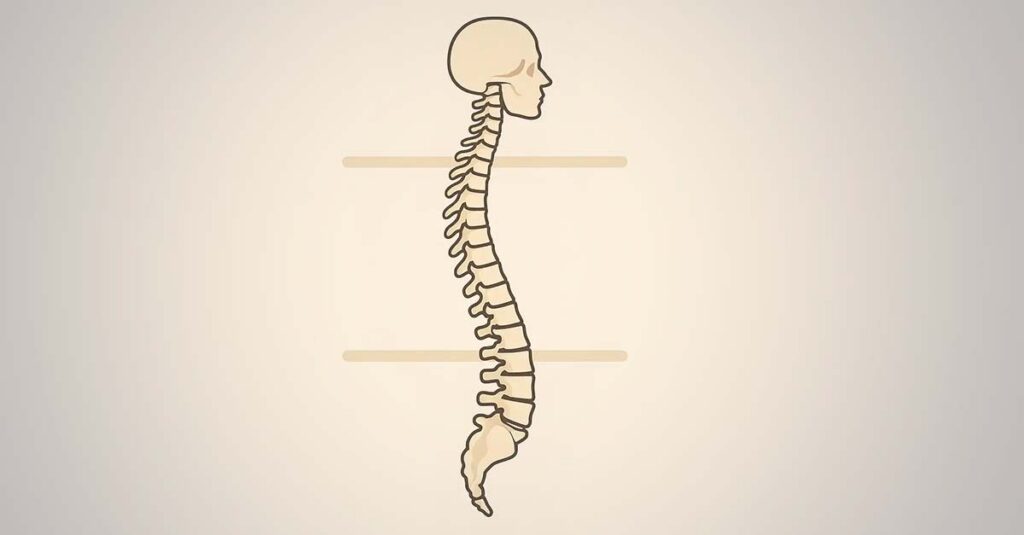
Veterans with service-connected conditions in both the cervical and thoracolumbar spinal regions may receive separate ratings for each. This is not considered pyramiding — the prohibited practice of assigning multiple ratings to the same disability — because these are anatomically distinct regions with discrete clinical findings. When both regions are thoroughly evaluated and independently documented, a veteran’s overall VA back rating may reflect the combined functional limitations across the full spinal column.
The VA has demonstrated a continued willingness to refine its rating schedules. As Hill & Ponton reports, “On May 19, 2024, the VA officially assigned celiac disease its own diagnostic code: 7355,” illustrating an ongoing process of diagnostic code revision that may eventually encompass complex spinal evaluation criteria.

How REE Medical Supports Accurate Medical Documentation
Navigating the documentation requirements for a VA rating for back pain can be a complex process, particularly when conditions involve multiple spinal regions, secondary diagnoses, or TDIU considerations. REE Medical coordinates access to independent, licensed healthcare professionals who complete DBQs and medical evaluations in accordance with VA formatting and documentation standards.
Many veterans find that existing medical records do not fully reflect the scope of their functional limitations. REE Medical connects veterans with providers who are familiar with disability-focused documentation and VA-standardized forms, with the goal of ensuring medical evidence is complete, clear, and accurately representative of the veteran’s condition — including range of motion measurements, functional assessments, and documentation relevant to secondary conditions. This comprehensive approach supports accurate VA evaluation of conditions across the full spectrum, including those above and below the average VA disability rating for back pain.
REE Medical’s flat-rate pricing structure means veterans can access these services without unexpected or variable costs. Their process is designed to address complex documentation needs across spinal conditions, secondary conditions, and cases involving TDIU consideration. REE Medical’s work coordinating documentation across multiple condition types — including those described in their resources on understanding VA disability benefits for PTSD — reflects their understanding of how multiple conditions can interact and affect the completeness of a veteran’s overall medical record.
Veterans can learn more about coordinating independent, VA-compliant medical evaluations by contacting REE Medical for an informational consultation.
Final Considerations
VA ratings for back pain are determined by functional limitations documented in the medical record — not solely by pain severity. The degree to which a back condition affects a veteran’s ability to work, perform daily activities, and maintain quality of life is reflected through objective clinical documentation. Secondary conditions can substantially affect a combined rating, making thorough evaluation of all related health impacts an important part of a complete medical record.
Whether a veteran is navigating an initial claim or a rating increase, the quality and completeness of the medical evidence in the record is central to how the VA assesses the full scope of the condition. For veterans at the beginning of this process, understanding who may qualify for VA disability offers foundational context before the first steps toward evaluation.
DISCLAIMER: REE Medical, LLC is not a Veterans Service Organization (VSO) or a law firm and is not affiliated with the U.S. Veterans Administration (“VA”). Results are not guaranteed, and REE Medical, LLC makes no promises. REE Medical’s staff does not provide medical advice or legal advice, and REE Medical is not a law firm. Any information discussed, such as, but not limited to, the likely chance of an increase or service connection, estimated benefit amounts, and potential new ratings, is solely based on past client generalizations and not specific to any one patient. The doctor has the right to reject and/or refuse to complete a Veteran’s Disability Benefit Questionnaire if they feel the Veteran is not being truthful. The Veteran’s Administration is the only agency that can make a determination regarding whether or not a Veteran will receive an increase in their service-connected disabilities or make a decision on whether or not a disability will be considered service-connected. This business is not sponsored by, or affiliated with, the United States Department of Veterans Affairs, any State Department of Military and Veterans Affairs, or any other federally chartered veterans service organization.