

VA Form 21P-8416: Understanding Medical Expense Documentation Requirements
VA Form 21P-8416, the Medical Expense Report, plays a specific role in the VA pension process: it allows veterans and survivors to report unreimbursed medical or dental expenses that can reduce countable income for pension purposes. Because pension eligibility, including Aid and Attendance and Housebound benefits, depends heavily on accurate income calculation, understanding how this form fits into the broader evidentiary picture clarifies why documentation quality matters. Many applicants focus primarily on the medical severity of a condition and treat the financial side of a pension application as simple data entry, yet income verification and medical expense reporting are reviewed with the same level of scrutiny as clinical evidence. This article explains what Form 21P-8416 covers, how it relates to Form 21-2680, how VA pension income limits work, and what the VA’s public guidance says about supporting medical and financial documentation.
What Form 21P-8416 Is Used For
According to the VA, Form 21P-8416 is used to report medical or dental expenses paid by a veteran or for a family member living in the veteran’s household. These reported expenses can be deducted from countable income when the VA calculates eligibility for pension benefits, since the Maximum Annual Pension Rate (MAPR) is compared against net income after allowable deductions.
Form 21P-8416 is not the form used to establish eligibility for Aid and Attendance or Housebound status. That determination relies on Form 21-2680, the Examination for Housebound Status or Permanent Need for Regular Aid and Attendance, which is completed by a licensed physician and addresses functional limitations directly. Applicants sometimes conflate these two forms because both are submitted as part of a broader pension claim, but each form serves a distinct evidentiary purpose within the VA’s review process.
Understanding this distinction matters because errors or omissions on Form 21P-8416 affect the income side of a pension determination, while the medical and functional evidence submitted through Form 21-2680 or supporting physician statements affects eligibility for increased benefits. A complete pension application generally accounts for both categories of evidence.

How Medical Expenses Are Documented
The VA’s public instructions for Form 21P-8416 describe the types of unreimbursed expenses that may be reported, including Medicare premiums, prescription costs, and payments to caregivers. Per VA guidance, supporting documentation such as receipts, explanation of benefits statements, or billing records is generally used to verify reported figures during claim review.
| Expense Category | Type of Documentation the VA References |
| Medicare premiums | Social Security Administration benefit statements |
| Prescription costs | Pharmacy receipts or annual summaries |
| Caregiver payments | Written care agreements and payment records |
| Home accessibility modifications | Contractor invoices and receipts |
| Health insurance premiums | Insurance billing statements |
Because pension eligibility is based on countable income after deductions, the completeness of this documentation directly affects how a claim is evaluated. Reported expenses that lack corroborating records may require the VA to request additional information before a determination on income eligibility can be finalized.

Aid and Attendance and Housebound Eligibility
Aid and Attendance and Housebound are increased pension benefits available to eligible veterans and survivors who meet specific medical and functional criteria. Per 38 CFR § 3.351, eligibility for increased pension by reason of need for aid and attendance is based on factors that include the inability to dress or undress without assistance, the inability to attend to the wants of nature without assistance, and incapacity requiring care to protect the claimant from the hazards or dangers of daily living. The same regulation addresses housebound status, which relates to permanent disability that substantially confines a claimant to their home or immediate premises.
According to the VA, current pension rate tables outline the Maximum Annual Pension Rate for veterans with and without Aid and Attendance or Housebound benefits, and these rates are adjusted periodically. The specific medical and functional evidence used to establish eligibility for these increased benefits is addressed through the C&P examination process and Form 21-2680, not through Form 21P-8416 itself. A veteran may qualify for one of these increased benefit categories depending on the severity and nature of documented functional limitations, and the VA’s regulations describe these categories as distinct rather than cumulative.
VA Pension Income and Net Worth Limits
Pension eligibility depends on both income and net worth. According to the VA, the net worth limit for VA pension eligibility is adjusted annually and, per current published guidance, stands at $163,699 for the period from December 1, 2025, through November 30, 2026. Net worth for this purpose generally includes the sum of a claimant’s assets and annual income, though a primary residence is typically excluded under VA regulations.
Per 38 CFR § 3.274, the VA defines net worth as the sum of a claimant’s or beneficiary’s assets and income for VA purposes, and the agency publishes the current limit on its website. The VA also applies a look-back period when reviewing asset transfers made before a pension application is filed, which is a regulatory mechanism intended to verify that reported net worth reflects a claimant’s actual financial circumstances. Because both income and net worth are evaluated together, medical expense deductions reported on Form 21P-8416 can directly affect whether a claimant’s net countable income falls within the applicable MAPR threshold.

How Income and Medical Evidence Are Reviewed
The VA reviews pension applications for both income eligibility and medical evidence when Aid and Attendance or Housebound benefits are claimed. Per VA guidance, countable income determinations take into account unreimbursed medical expenses reported on Form 21P-8416, while functional and medical eligibility for increased benefits is documented separately through physician statements and Form 21-2680.
Veterans’ C-files may contain prior medical evidence, service-connected disability records, and previous benefit determinations. According to the VA, claims are evaluated based on the current evidence of record, and additional development may occur when submitted documentation requires clarification. This means that both the income-related documentation submitted with Form 21P-8416 and any medical evidence submitted in support of Aid and Attendance or Housebound eligibility are considered together as part of a single pension determination, even though they address separate regulatory requirements.
The VA Claim Exam and Its Role in Pension Determinations
In some cases, the VA schedules a claim examination, sometimes referred to as a Compensation & Pension (C&P) exam, to assist in evaluating a claim. According to the VA, the VA claim exam helps determine whether a disability is related to service and helps establish the severity of a disability where applicable. For pension claims involving Aid and Attendance or Housebound benefits, this type of examination, or the information gathered through Form 21-2680, provides medical evidence that the VA uses to evaluate functional limitations against regulatory criteria.
REE Medical coordinates independent medical evaluations and Disability Benefits Questionnaires completed by licensed healthcare professionals who are familiar with disability-focused documentation and VA-standardized forms, including forms relevant to pension-related medical evidence such as Form 21-2680. Public Disability Benefits Questionnaires are also available directly through the VA for veterans who wish to review the structure of these forms.
Timely, Complete Documentation
The VA’s evidentiary standards generally call for medical evidence supporting a claim to be reasonably current at the time of review. According to the VA, when additional or updated medical evidence is needed, the VA may request it through a development letter, and updated evidence may be submitted directly to the regional office handling a claim.
Complete documentation, including itemized receipts for reported medical expenses and physician-completed forms where applicable, supports the VA’s ability to review a claim without unnecessary delay. The specific evidentiary standards applicable to any individual claim depend on the facts of that claim and current VA regulations, and the VA remains the sole authority for determining what evidence is sufficient in a given case.

Decision Reviews and Appeals
If a pension claim, including one involving Form 21P-8416 or Aid and Attendance and Housebound eligibility, results in a decision a claimant disagrees with, the VA offers several formal review options. According to the VA, decision reviews and appeals may include a Supplemental Claim, a Higher-Level Review, or a Board Appeal, each of which involves distinct evidentiary standards and timelines. Per the VA’s Decision Reviews FAQs, claimants who disagree with a decision may request one of these review options, and updated medical or financial documentation often plays a role in how a claim is reevaluated.
Claimants can also use the VA’s online tools to check the status of a claim, decision review, or appeal at any point after submission. This resource reflects publicly available information directly from the VA rather than case-specific guidance.
REE Medical’s Role in Supporting Documentation
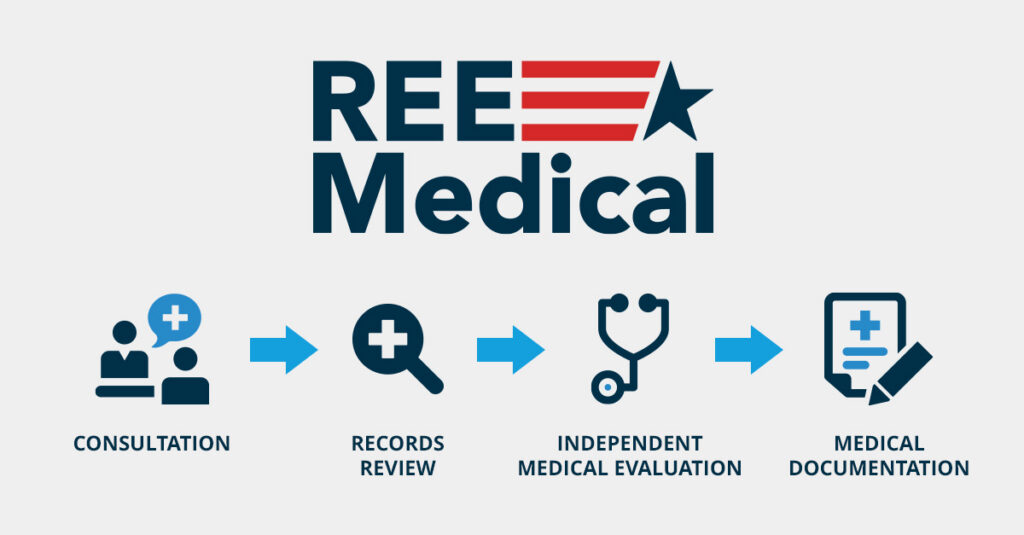
REE Medical coordinates independent medical evaluations and Disability Benefits Questionnaires completed by licensed healthcare professionals who are familiar with disability-focused documentation and VA-standardized forms. REE Medical does not prepare, present, or submit VA claims and does not provide legal or representational services under 38 U.S.C. § 5901 or 38 U.S.C. § 5904.
Licensed providers coordinated through REE Medical complete objective medical documentation that reflects a veteran’s current condition and functional status, consistent with standard clinical practice. Veterans can learn more about coordinating independent, VA-compliant medical evaluations by contacting REE Medical for a complimentary, informational consultation.
Summary of Key Distinctions
Pension applications involving medical expense reporting and increased benefit eligibility rely on several distinct forms and regulatory standards, each serving a different function in the VA’s review process.
| Topic | Governing Form or Source |
| Reporting medical/dental expenses | Form 21P-8416 |
| Establishing Aid and Attendance or Housebound eligibility | Form 21-2680 |
| Regulatory criteria for aid and attendance/housebound | 38 CFR § 3.351 |
| Net worth definition and limits | 38 CFR § 3.274 and VA pension rates |
| Requesting a decision review | VA Decision Reviews and Appeals |
Veterans and survivors navigating a pension claim benefit from understanding that income documentation, medical evidence, and regulatory eligibility criteria are reviewed as separate but interconnected components of the same application. Each component draws on distinct VA forms and regulations, and accurate, well-documented submissions in each category support a more complete record for VA review.
Disclosure
DISCLAIMER: REE Medical, LLC is not a Veterans Service Organization (VSO) or a law firm and is not affiliated with the U.S. Veterans Administration (“VA”). Results are not guaranteed, and REE Medical, LLC makes no promises. REE Medical’s staff does not provide medical advice or legal advice, and REE Medical is not a law firm. Any information discussed, such as, but not limited to, the likely chance of an increase or service connection, estimated benefit amounts, and potential new ratings, is solely based on past client generalizations and not specific to any one patient. The doctor has the right to reject and/or refuse to complete a Veteran’s Disability Benefit Questionnaire if they feel the Veteran is not being truthful. The Veteran’s Administration is the only agency that can make a determination regarding whether or not a Veteran will receive an increase in their service-connected disabilities or make a decision on whether or not a disability will be considered service-connected. This business is not sponsored by, or affiliated with, the United States Department of Veterans Affairs, any State Department of Military and Veterans Affairs, or any other federally chartered veterans service organization.