
VA Form 21-0779: Understanding Nursing Home Information for Aid and Attendance Claims
VA Form 21-0779 is often mischaracterized in informal online discussions of veterans’ benefits, and clarifying its actual purpose helps veterans and their families avoid confusion when preparing pension-related claims. This form is not a general medical records authorization form; it serves a specific function within the VA’s process for evaluating non-service-connected pension claims involving nursing home care. This article explains what Form 21-0779 authorizes, how it fits within the VA’s Aid and Attendance benefit determination, how the VA’s broader duty to assist obtains medical evidence, and how Disability Benefits Questionnaires and other supporting documentation contribute to a complete claim file.
What VA Form 21-0779 Actually Is
According to the VA, Form 21-0779 is used by a nursing home official to verify that a veteran, or someone connected to a veteran, is a patient in a qualifying extended care facility. Per the Veterans Benefits Administration’s published version of the form, titled “Request for Nursing Home Information in Connection with Claim for Aid and Attendance,” the VA uses this form specifically to determine eligibility for pension and Aid and Attendance benefits based on nursing home status.
This form is completed by nursing home staff, not by a private treating physician submitting general medical records. According to legal resources describing the form’s function, Form 21-0779 is used only for certain non-service-connected pension claims involving a veteran or surviving spouse residing in a nursing facility, and it documents details such as the level of care required and the facility’s billing information relevant to that determination.
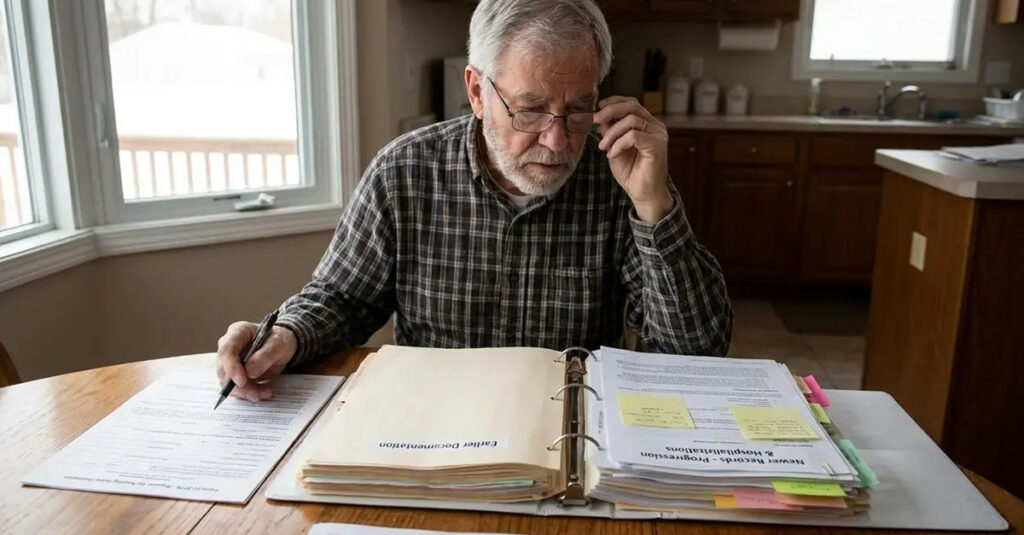
Because this form originates with the facility rather than the claimant, the accuracy and completeness of the information the nursing home provides directly affects how the VA evaluates the pension claim. A facility that leaves fields incomplete, or that fails to describe the specific level of care being provided, can inadvertently create delays similar to those seen with other incomplete supporting documentation submitted to the VA.
How Form 21-0779 Fits Into Aid and Attendance Claims
Aid and Attendance is an increased pension benefit available to eligible veterans and survivors who require regular assistance with daily activities or who reside in a nursing facility due to mental or physical incapacity. Per 38 CFR § 3.351, eligibility factors include the inability to dress or undress without assistance, the inability to attend to the wants of nature without assistance, and incapacity requiring care to protect the claimant from the hazards of daily living.
When a claimant resides in a nursing home, the VA needs specific verification of that residency and the level of care being provided in order to evaluate eligibility under this regulatory framework. Form 21-0779 provides that verification directly from the facility, supplementing the medical evidence otherwise required to establish a claim. This distinguishes nursing home-based Aid and Attendance claims from claims where a veteran resides at home and relies primarily on a physician’s examination, typically documented through VA Form 21-2680, to establish the same functional criteria.
Distinguishing Form 21-0779 From Form 21-2680
Veterans and families researching Aid and Attendance eligibility sometimes encounter multiple forms without a clear sense of which applies to their situation. According to the VA, Form 21-2680, Examination for Housebound Status or Permanent Need for Regular Aid and Attendance, is completed by a licensed physician and documents functional limitations directly, and it applies broadly to claimants seeking this increased benefit regardless of living situation.
Form 21-0779, by contrast, applies specifically when a claimant is residing in a nursing home, and it is completed by facility staff rather than a treating physician. A claimant who transitions from home care to nursing home care during the course of a claim, or between an initial claim and a later review, may need documentation from both forms depending on the timeline of their care.
The VA’s Duty to Assist in Obtaining Medical Evidence
Separate from Form 21-0779, the VA’s general obligation to help claimants gather evidence is governed by federal regulation. Per 38 CFR § 3.159, the VA has a duty to assist claimants in obtaining evidence necessary to substantiate a claim once a substantially complete claim has been received, and this duty includes making reasonable efforts to obtain relevant records, including records from private medical care providers who treated a claimant.
According to this regulation, a claimant must provide enough information to identify and locate existing records, including the person, company, agency, or other custodian holding the records. This is the framework under which the VA requests private medical records generally, using forms specifically designed to authorize release of private treatment records to the VA. These authorization forms serve a different function than Form 21-0779 and apply to disability compensation and pension claims more broadly, not solely to nursing home verification.
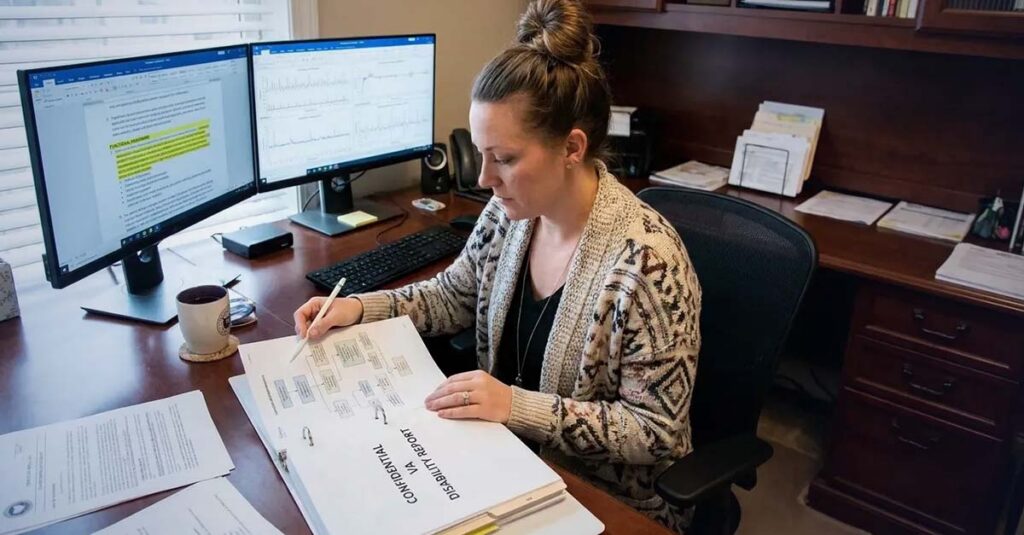
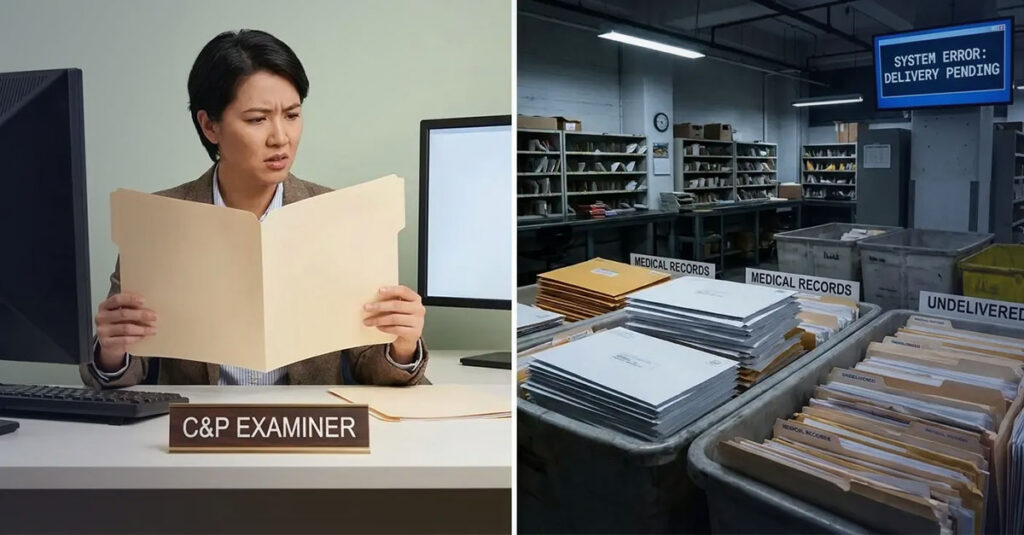
Because the duty to assist operates within defined procedural boundaries rather than as an unlimited guarantee, claimants benefit from understanding that requesting records is not the same as ensuring those records arrive complete or on a specific timeline. Providers respond to VA requests according to their own internal procedures, and response times can vary based on staffing and recordkeeping practices.
Disability Benefits Questionnaires and Medical Evidence Quality
Because medical records created for routine treatment purposes do not always address the specific criteria the VA uses to evaluate a claim, the VA has developed standardized forms designed to bridge this gap. According to the VA, Disability Benefits Questionnaires (DBQs) help collect the medical information needed to process disability claims, and veterans can use these forms to submit medical evidence directly from their healthcare provider.
Per legal resources describing DBQs, these standardized forms are used by VA clinicians and contractors, as well as private physicians, to provide specific information about a veteran’s disability using the same criteria VA raters apply. Because DBQ questions are structured around the VA’s rating schedule, a DBQ completed by a treating provider can document functional limitations, symptom frequency, and severity in a format aligned with how a claim is evaluated, which is a distinct advantage compared to records created solely for treatment purposes.
This distinction matters for nursing home residents as well. A physician’s DBQ or a Form 21-2680 examination can describe cognitive or physical decline in clinical detail, while Form 21-0779 separately confirms the administrative fact of nursing home residency and the associated cost of care. Together, these documents address different but complementary elements of an Aid and Attendance determination.
What VA Adjudicators Evaluate in Medical Evidence
VA raters evaluate claims against the specific criteria established in 38 CFR Part 4, the Schedule for Rating Disabilities, which for many conditions includes measurable clinical findings and documented functional impact. According to VA regulations, evidence that speaks directly to these criteria, such as specific frequency of symptoms, documented functional limitations, and clinical findings tied to diagnostic codes, is directly relevant to how a rating is determined.
This is why documentation quality matters as much as documentation existence. Comprehensive medical evidence completed by a licensed provider, whether through a DBQ or a detailed clinical note, that addresses functional impact alongside diagnosis and treatment gives VA raters a more complete basis for evaluating a claim than records focused solely on treatment planning. For pension and Aid and Attendance claims specifically, this often means documentation describing a claimant’s ability to perform activities of daily living, rather than a diagnosis alone.
The Compensation and Pension Examination Process
In many claims, the VA schedules a Compensation and Pension (C&P) examination to evaluate a claimed condition. According to the VA, the VA claim exam is used to determine whether a disability is related to service and to assess the current severity of a disability where applicable. The examiner’s findings become part of the evidence the VA considers alongside any private medical records, DBQs, or facility-provided documentation such as Form 21-0779 already in the claim file.
Per the VA’s regulatory framework, all relevant evidence of record, including private treatment records obtained through the appropriate authorization forms, VA medical center records, nursing home verification documents, and C&P examination findings, is considered together when a rating decision is made. Because this evidence comes from multiple sources and may be received at different points during claims processing, ensuring that relevant documentation is submitted as early and completely as possible supports a more efficient review.
Submitting Private Medical Records and Supporting Documentation Directly
Veterans and their families are not limited to waiting on VA-initiated records requests. According to the VA’s guidance on filing a disability claim, claimants may submit private medical evidence directly as part of their claim, in addition to authorizing the VA to request records independently. Submitting records directly, when a claimant already has copies available, can help ensure that specific, relevant documentation reaches the claim file without depending solely on a third-party records request process.
For nursing home residents, this may include obtaining a completed Form 21-0779 proactively from facility administration and submitting it alongside the pension claim, rather than waiting for the VA to separately request that information from the facility after the claim has already been filed.
Decision Reviews if a Claim Is Denied
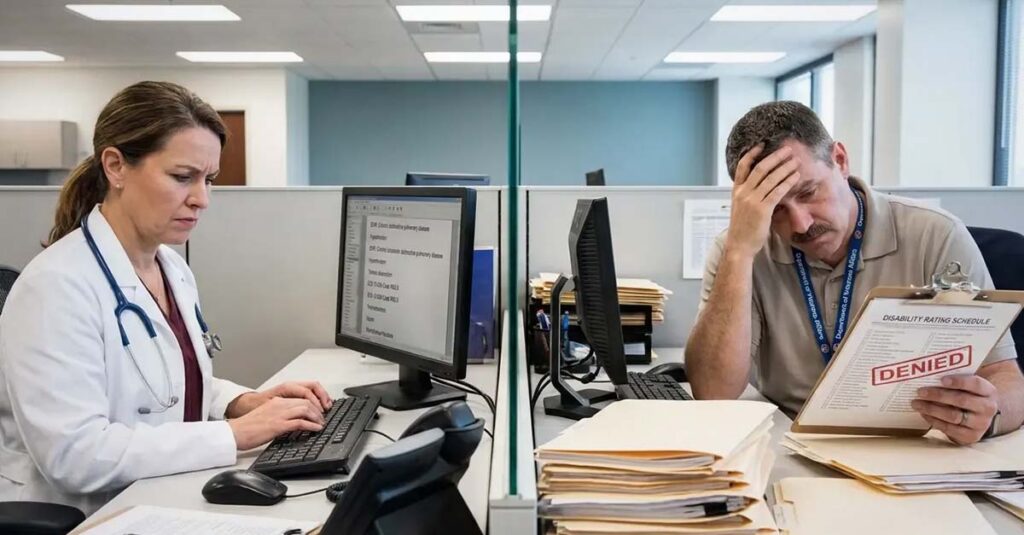
If a claimant disagrees with a decision related to a pension, Aid and Attendance, or disability compensation claim, the VA’s standard decision review framework applies. According to the VA, decision reviews and appeals options include a Supplemental Claim, a Higher-Level Review, or a Board Appeal, each involving distinct evidentiary standards. A Supplemental Claim, submitted using VA Form 20-0995, allows a claimant to submit new and relevant evidence that was not previously considered. Per the VA’s Decision Reviews FAQs, updated medical evidence often plays a role in how a Supplemental Claim is resolved.
For a denied Aid and Attendance claim involving nursing home residency, updated evidence submitted with a Supplemental Claim might include a more detailed Form 21-0779 from the facility, an updated physician examination, or additional documentation addressing the specific eligibility criteria under 38 CFR § 3.351 that the original decision found lacking.
Coordinating Independent Medical Documentation
Because standard treatment records do not always address the specific functional criteria the VA’s rating schedule requires, independent medical evaluations completed by licensed providers can supplement a veteran’s existing medical evidence. These evaluations provide current, objective clinical documentation that reflects a veteran’s condition and functional status at the time of examination.
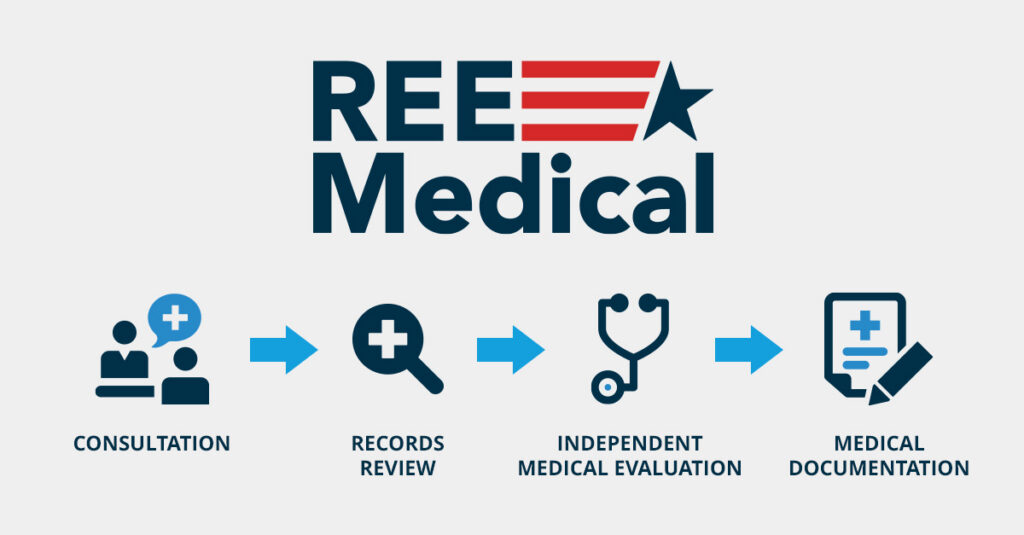
REE Medical coordinates independent medical evaluations and Disability Benefits Questionnaires completed by licensed healthcare professionals who are familiar with disability-focused documentation and VA-standardized forms. REE Medical does not prepare, present, or submit VA disability or pension claims and does not provide legal or representational services under 38 U.S.C. § 5901 or 38 U.S.C. § 5904.
Licensed providers coordinated through REE Medical complete objective medical documentation that reflects a veteran’s current condition, consistent with standard clinical practice and the criteria set out in the VA’s rating schedule. Veterans working through a pension, Aid and Attendance, or disability compensation claim can learn more about coordinating independent, VA-compliant medical evaluations by contacting REE Medical for a complimentary, informational consultation.
Working With Accredited Representatives
Veterans navigating nursing home documentation, pension eligibility, or disability compensation claims are not required to manage the process alone. According to the VA, individuals can find an accredited representative or Veterans Service Organization (VSO) to assist with filing a claim or requesting a decision review. Per the VA, accredited attorneys, claims agents, and VSO representatives are trained specifically to help veterans navigate claims involving complex evidentiary requirements, including pension claims involving nursing home care.
Families managing a nursing home resident’s pension claim may find it useful to involve an accredited representative early, particularly when coordinating between facility administration, treating physicians, and the VA’s evidentiary requirements becomes difficult to track independently.
Reviewing the Full Evidentiary Picture
Understanding what a specific VA form does, and does not, authorize is an important part of preparing an accurate and complete claim. Form 21-0779 verifies nursing home status for Aid and Attendance pension eligibility, while separate forms and regulatory provisions, including Form 21-2680, Form 21-4142, and the VA’s duty-to-assist obligations under 38 CFR § 3.159, govern the broader process of establishing and evidencing pension and disability claims generally. Recognizing which form addresses which evidentiary requirement helps prevent the confusion that can arise when these distinct forms are treated interchangeably.
Because outcomes depend on the specific facts and evidence in each individual case, and because forms and procedures are updated periodically, veterans and their families are encouraged to review the VA’s published guidance directly and to consult with an accredited representative regarding their specific circumstances.
Disclosure
DISCLAIMER: REE Medical, LLC is not a Veterans Service Organization (VSO) or a law firm and is not affiliated with the U.S. Veterans Administration (“VA”). Results are not guaranteed, and REE Medical, LLC makes no promises. REE Medical’s staff does not provide medical advice or legal advice, and REE Medical is not a law firm. Any information discussed, such as, but not limited to, the likely chance of an increase or service connection, estimated benefit amounts, and potential new ratings, is solely based on past client generalizations and not specific to any one patient. The doctor has the right to reject and/or refuse to complete a Veteran’s Disability Benefit Questionnaire if they feel the Veteran is not being truthful. The Veteran’s Administration is the only agency that can make a determination regarding whether or not a Veteran will receive an increase in their service-connected disabilities or make a decision on whether or not a disability will be considered service-connected. This business is not sponsored by, or affiliated with, the United States Department of Veterans Affairs, any State Department of Military and Veterans Affairs, or any other federally chartered veterans service organization.