


VA Rating for Hemorrhoids: Understanding the 0% Rating and Medical Evidence Requirements
Veterans navigating the VA rating for hemorrhoids often find themselves overwhelmed by regulations, terminology, and the strict criteria tied to Diagnostic Code 7336. This guide examines how the VA evaluates hemorrhoids—focusing on medical management, documented clinical findings, and evidence requirements—while highlighting why many veterans receive a lower rating than expected. Whether symptoms are new, recurring, or tied to another condition, understanding the criteria and the medical evaluation process is essential when pursuing disability compensation.
Executive Summary
Service connection requires establishing a medical nexus, not just presenting a diagnosis. Ratings under Diagnostic Code 7336 range from 0% to 20%. Secondary conditions like anemia or fissures can increase overall compensation. Private medical evidence can provide comprehensive documentation when VA examinations are limited. Before examining the specifics of this condition, understanding how VA ratings work generally provides essential context, as the fundamental rules of evidence apply here just as they do for other claims.

Establishing Service Connection
Most claims for this condition encounter difficulties at the initial stage. Having the condition isn’t sufficient; veterans must demonstrate the military caused it. The difference between a direct injury during service and a condition that developed because of another service-connected issue determines the claim strategy.
The volume of these claims is significant, with reports indicating that the VA “pays out monthly stipends to… 330,000 who have hemorrhoids.”
Direct Service Connection
This is the standard route most veterans attempt first. This path requires a paper trail from time in uniform. When veterans didn’t seek medical attention during service due to embarrassment or attempting to continue duty, this path becomes substantially more difficult. Service treatment records become critical documentation.
The In-Service Event
Proof of an event is required. What qualifies as an “event” in the VA’s evaluation includes medical records showing treatment for rectal pain, bleeding, or prescriptions for hemorrhoid creams while on active duty. Without this specific documentation, direct connection is extremely difficult to establish.
The Service Documentation Gap:
Mark served in the Infantry and developed hemorrhoids after rucking with heavy packs for years. He never sought medical attention because he didn’t want to be taken off the duty roster. Years later, he filed a claim. Because his Service Treatment Records (STRs) were empty, the VA denied the claim. To address this gap, “Buddy Statements” (VA Form 21-4138) from platoon mates confirming they witnessed him purchasing over-the-counter creams and experiencing pain during deployment can serve as proxy evidence.

Current Diagnosis Requirement
A diagnosis from 2010 doesn’t establish current disability. The VA requires proof of a current condition. If the condition has resolved or hasn’t been documented by a physician recently, the claim will likely be denied. A current medical evaluation is necessary before filing.
Secondary Service Connection
This pathway is frequently overlooked. Many veterans don’t realize their hemorrhoids are a symptom of another condition already rated. Linking this condition to an existing disability can be more successful than attempting to prove a direct connection from years ago.
| Primary Condition | How it Causes Hemorrhoids (The Link) |
| IBS (Irritable Bowel Syndrome) | Chronic diarrhea and constipation cause straining, which inflames veins |
| GERD | Digestive distress and straining during bowel movements |
| Back/Knee Injuries | Sedentary lifestyle due to immobility or pain medication side effects |
| PTSD/Mental Health | Side effects of antidepressants causing severe constipation |
IBS and GI Links
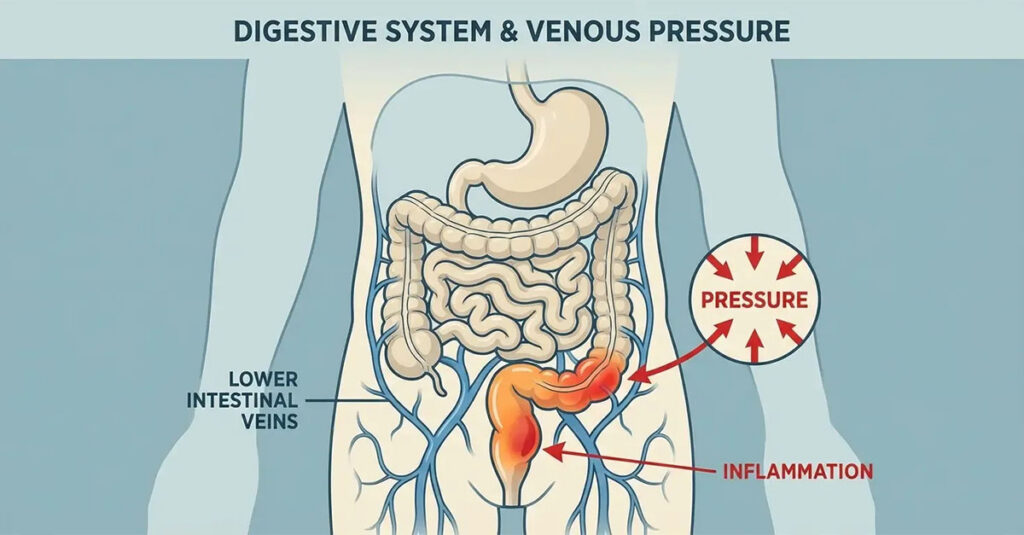
Gastrointestinal issues are common among veterans. The physiological link is straightforward: conditions like Irritable Bowel Syndrome (IBS) often cause straining or chronic diarrhea. This physical stress on the body directly leads to hemorrhoid development, making them eligible for secondary service connection.
Because digestive health is complex, veterans struggling with IBS can learn how that primary condition serves as the anchor for secondary hemorrhoid claims.

Medication Side Effects
Medication regimens often reveal important connections. High-strength painkillers (opioids) and certain mental health medications list constipation as a major side effect. When a veteran takes medication for a service-connected back injury or PTSD and that medication causes constipation leading to hemorrhoids, that constitutes a valid claim pathway.
The Medication Connection:
Sarah is rated 40% for a lumbar strain. Her VA doctor prescribes hydrocodone for pain management. A known side effect of opioids is severe constipation. Sarah strains excessively during bowel movements, causing external hemorrhoids. She filed for hemorrhoids secondary to her back condition, citing the medication as the connecting factor.

The Independent Medical Opinion
The VA doesn’t automatically assume connections exist. An independent medical opinion from a physician that explicitly states “at least as likely as not” that the hemorrhoids are caused by the primary condition or medication is necessary. This document is often the determining factor in secondary claims.
This medical opinion is critical; learning about the VA Nexus Letter and understanding independent medical opinions for service connection clarifies how physicians should phrase their findings to support claims.
Independent Medical Opinion Requirements:
- Statement of “at least as likely as not” (50% probability)
- Citation of specific medical literature linking the conditions
- Review of specific Service Treatment Records
- Rationale based on unique medical history, not generalities
Understanding the Rating Schedule
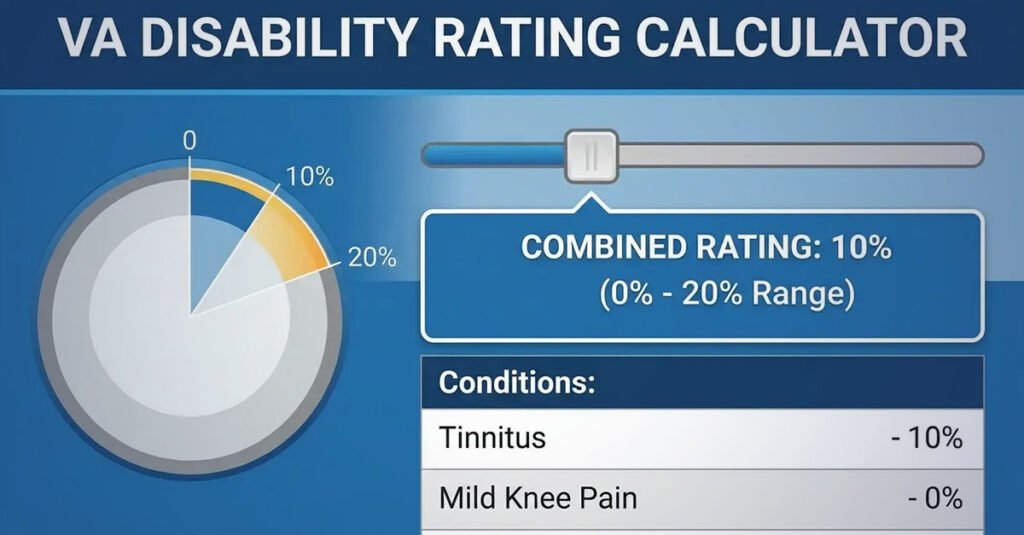
The Schedule for Rating Disabilities, specifically Diagnostic Code 7336, governs these ratings. Unlike some conditions that extend to 100%, this specific code has a lower maximum. Understanding the specific medical terms used in this schedule is vital for determining rating eligibility.
| Rating | Symptoms Required (Diagnostic Code 7336) |
| 0% | Mild or moderate symptoms; condition is present but manageable |
| 10% | Large or thrombotic hemorrhoids; excessive redundant tissue; prolapse that can be reduced |
| 20% | Persistent bleeding; secondary anemia; fissures; or thrombotic hemorrhoids that are irreducible |
The 0% Rating
A non-compensable rating validates that service caused the issue, but the VA determines it doesn’t prevent work. The symptom profile for this rating indicates the condition exists but is managed with over-the-counter medications and doesn’t involve significant bleeding.
Strategic Value of 0% Ratings
A 0% rating provides strategic benefits. It grants access to healthcare for that specific condition and, more importantly, establishes service connection. If the condition worsens over time, the foundation exists to file for an increase.
Many veterans dismiss non-compensable ratings, but understanding what a zero percent disability rating provides reveals that it offers priority healthcare access and a foundation for future increases.
The 10% Rating
Monetary compensation requires persistent symptoms. The criteria for a 10% rating focus on the requirement for physical evidence. Subjective pain reports are insufficient; a physician needs to observe specific physical manifestations during examination.
“Until May of 2024, the VA used to assign a 0% disability rating for mild or moderate hemorrhoids. Now the minimum disability rating is 10%.”
Thrombotic Hemorrhoids
“Thrombotic” refers to blood clots forming inside the vein, which causes significant pain. The presence of large external hemorrhoids or these clotted veins that don’t resolve is the threshold for reaching the 10% rating.
The 20% Maximum Rating
This is typically the ceiling for Code 7336. Severe symptoms are required to reach this level. It’s not solely about pain; it involves chronic, severe issues that likely interfere with daily life.
Persistent Bleeding
Occasional spotting doesn’t qualify for 20%. The requirement is for “persistent bleeding,” implying frequent, heavy episodes that might cause secondary health issues. Documentation of this frequency is essential.
Prolapse and Clots
The medical concept of prolapse—internal tissue protruding outside the body—combined with thrombosis requires documentation. For the maximum rating, these issues must be persistent and not easily reducible (pushed back in). This indicates failure of standard treatments.
Ulceration
This represents severe tissue breakdown. When medical evidence shows ulceration, it demonstrates the condition is chronic and causing damage. This specific medical finding strongly indicates the 20% rating.
Secondary Conditions and Complications
Sometimes the rating system is too narrow. Looking for “secondary” ratings when hemorrhoids cause other problems becomes necessary. Understanding “pyramiding” rules is also essential to avoid accidentally undermining claims by attempting to rate the same symptom twice.
In a significant appeal case, a veteran successfully argued their condition was more severe, and “The Board ultimately decided to increase the disability rating to 30% for hemorrhoids post-hemorrhoidectomy with impairment of sphincter control.”
Secondary Anemia
Blood loss has consequences. When bleeding is severe enough to lower hemoglobin levels, the resulting anemia is a separate condition. This can be rated in addition to the hemorrhoids, potentially bypassing the 20% cap of the primary condition.

Hemoglobin Levels and Ratings
The rating for anemia is strictly numbers-based. Lower hemoglobin concentration in blood work results in higher ratings. In extreme cases, this can lead to significant compensation, but consistent lab results are necessary to establish the condition.
Fissures, Fistulas, and Strictures
Misdiagnosis affects compensation. Veterans sometimes confuse hemorrhoids with fissures (tears) or fistulas (tunnels). These have their own diagnostic codes (7335 and 7333) and can sometimes be rated higher or separately. Physicians must be precise in their diagnoses.
Fistulas (Code 7335)
A fistula is an abnormal tunnel between the anal canal and skin. It is rated based on drainage and frequency. When a veteran has this alongside hemorrhoids, the VA must identify it as a distinct issue to potentially add 10% to 30% to the overall rating.
Strictures (Code 7333)
Scarring can narrow the anal opening, requiring dilation. This is a separate mechanical issue from hemorrhoids themselves and should be evaluated for its own rating when present.
Diagnostic Precision
Precision matters in medical documentation. When a physician categorizes everything under “hemorrhoids,” veterans may lose potential separate ratings. Clear differentiation between these conditions in medical documentation supports accurate VA evaluation.
The Pyramiding Rule
The VA has a rule against paying twice for the same symptom. “Pyramiding” in this context means veterans cannot receive a rating for hemorrhoids based on “rectal pain” and another rating for a fissure based on the same “rectal pain.” Articulating distinct symptoms for distinct conditions becomes necessary.
Understanding the Pyramiding Rule:
John has both hemorrhoids and an anal fissure.
Insufficient Documentation: He reported “rectal pain” for both claims. The VA rated only the hemorrhoids (likely 10%) and denied the fissure as pyramiding.
Effective Documentation: He explained the hemorrhoids cause “prolapse and swelling,” while the fissure causes “sharp, tearing pain during movement.” Distinct symptoms resulted in potential for separate ratings.
Overlapping Symptoms
Other digestive conditions create specific challenges. When a veteran is already rated for a condition that includes rectal pain as a symptom, the VA might bundle the hemorrhoids into that existing rating. Demonstrating that the hemorrhoids cause different functional impairment becomes necessary.
Personal and Lay Evidence
Medical records capture clinical data; personal statements provide daily context. “Lay evidence” provides important context. While the rating schedule is strict, explaining how the condition affects the ability to sit, drive, or work adds necessary context that a simple diagnosis code lacks.

Personal Statements
VA Form 21-4138 allows veterans to provide detailed accounts. Honest reporting about embarrassment, hygiene struggles, and pain during work hours bridges the gap between clinical notes and the reality of disability.
Personal Statement Structure (VA Form 21-4138):
- The Origin: “Bleeding was first noticed during deployment to…”
- The Frequency: “Severe flare-ups occur approximately 3 times monthly.”
- The Severity: “During flare-ups, the pain level is 8/10 and sitting for more than 15 minutes becomes impossible.”
- The Impact: “Unpaid breaks at work are necessary to manage hygiene, and long car rides with family are avoided.”
Spousal Statements
Spouses often observe the extent of suffering more comprehensively than anyone else. A statement from a spouse regarding the veteran’s daily struggles—details they might be reluctant to tell a physician—adds significant credibility to claims.
The Examination Process and Medical Evidence
Claims depend on documentation quality. The VA relies heavily on the Disability Benefits Questionnaire (DBQ). The Compensation and Pension (C&P) examination is often the most challenging aspect of this specific claim.
The C&P Examination
These examinations can be uncomfortable, rushed, and impersonal. The examiner is there to complete a form, not to provide treatment, which often creates a disconnect in how severity is recorded.
Physical Examination
Physical inspection is typically required to confirm prolapse or thrombosis. Understanding this examination component is part of the process and cooperation is necessary for complete evaluation so claims aren’t denied for lack of participation.
Objective vs. Subjective Evidence
What veterans feel (subjective) differs from what physicians observe (objective). The VA rates based on objective findings. Documentation must record the size, bleeding, or prolapse, rather than simply noting “patient complaints of pain.”
Understanding the DBQ
The Disability Benefits Questionnaire contains specific questions the VA uses to determine ratings. Familiarity with the DBQ helps veterans articulate symptoms in the language the VA evaluates.
Veterans can learn more about examination questions by reviewing information about the DBQ for securing VA benefits, clarifying exactly what information examiners are required to capture.

Private Medical Evidence
Submitting evidence from private physicians offers an alternative to the standard VA route. Private physician evaluations often result in more comprehensive and thorough assessments. Private doctors are generally less rushed and more willing to review complete medical histories.
Comprehensive Documentation
Private physicians typically produce more detailed notes. A private physician is more likely to document the frequency of flare-ups and the history of failed treatments over time. This longitudinal evidence is often missing from one-time VA examinations.
Record-Based Ratings
Strong private evidence provides a significant benefit. When private medical records and DBQs are sufficient, the VA may rate the claim based on the record alone. This can spare veterans from undergoing redundant and invasive government examinations.

REE Medical’s Approach to Sensitive Evaluations
Pursuing a VA rating for hemorrhoids creates unique challenges, and many veterans discontinue claims because of invasive examinations. REE Medical coordinates access to medical professionals who prioritize dignity and documentation accuracy.
Respectful Evaluations: REE Medical connects veterans with physicians who provide respectful care and invest time in comprehensive evaluations.
Documentation Accuracy: Whether veterans are rated at 0% or qualify for the maximum 20%, the network focuses on capturing objective evidence—such as thrombosis or persistent bleeding—that the VA requires.
Transparent Pricing: REE Medical operates on a flat-rate model with no contingency fees on back pay, providing cost transparency upfront.
Secondary Claims: When conditions result from medications for other disabilities, REE Medical coordinates documentation of those medical connections.
Veterans can learn more about coordinating independent medical documentation by contacting REE Medical for an informational consultation.
Conclusion
Service-connected conditions deserve proper recognition and compensation. Obtaining accurate medical evidence supports ratings that reflect the true impact of daily symptoms. The VA rating for hemorrhoids depends on documented medical findings, clear service connection, and comprehensive evidence of severity. REE Medical coordinates independent medical evaluations to support accurate VA assessment when standard examinations are insufficient.
DISCLOSURE
DISCLAIMER: REE Medical, LLC is not a Veterans Service Organization (VSO) or a law firm and is not affiliated with the U.S. Veterans Administration (“VA”). Results are not guaranteed, and REE Medical, LLC makes no promises. REE Medical’s staff does not provide medical advice or legal advice, and REE Medical is not a law firm. Any information discussed, such as, but not limited to, the likely chance of an increase or service connection, estimated benefit amounts, and potential new ratings, is solely based on past client generalizations and not specific to any one patient. The doctor has the right to reject and/or refuse to complete a Veteran’s Disability Benefit Questionnaire if they feel the Veteran is not being truthful. The Veteran’s Administration is the only agency that can make a determination regarding whether or not a Veteran will receive an increase in their service-connected disabilities or make a decision on whether or not a disability will be considered service-connected. This business is not sponsored by, or affiliated with, the United States Department of Veterans Affairs, any State Department of Military and Veterans Affairs, or any other federally chartered veterans service organization.