
VA Form 21-22a: What Happens After You Submit and Why It Matters for Your Claim
VA Form 21-22a is the document veterans use to designate an authorized representative in dealings with the Department of Veterans Affairs. The process of completing and submitting the form receives considerable attention, but the post-submission phase — what the VA’s systems do with the form, when your representative actually gains access to your file, and how the resulting administrative timeline intersects with your claim — is rarely explained in detail. This gap in understanding costs veterans time and, in some cases, results in missed deadlines or claims that advance without effective representative involvement. This article examines the mechanics of what occurs after VA Form 21-22a is submitted, the processing timeline veterans should anticipate, and how to manage the representation relationship once the form is in the VA’s hands.
The Processing Pipeline: Where VA Form 21-22a Goes After Submission
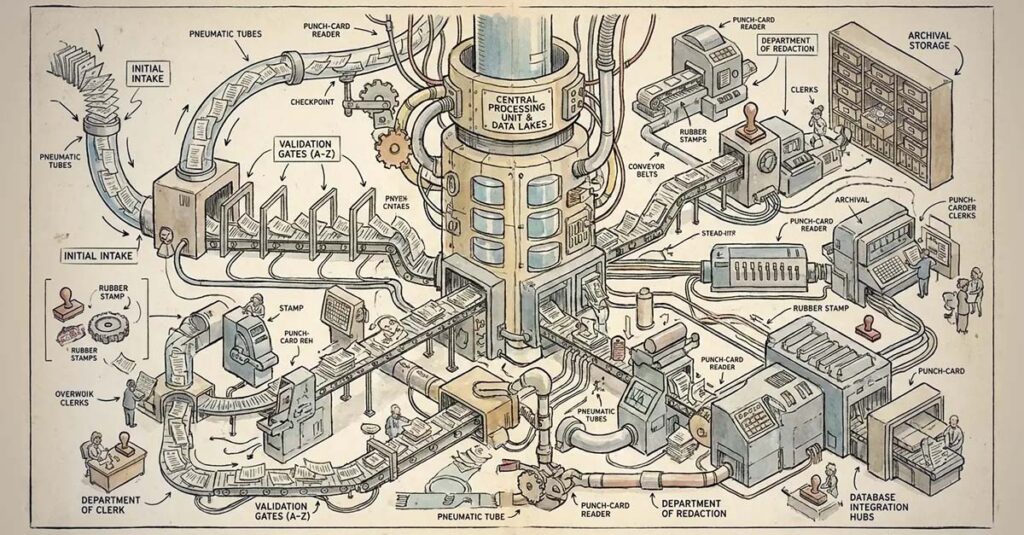
Submitting VA Form 21-22a initiates a multi-step administrative process before your representative gains any access to your file. The VA’s system first validates the form for completeness — checking that required signatures, dates, and accreditation information are present and accurate. Even digital submissions through VA.gov require human review at certain stages rather than fully automated processing.
The form then routes to the VA’s centralized database, where it is matched to your existing veteran file. The VA cross-references your Social Security number, VA file number, and personal identifiers across multiple internal systems that do not always communicate in real time. If you have had prior representation, the system flags potential conflicts and routes the form for additional review before access permissions are modified.
The entire process — from digital submission to full representative access — typically takes three to seven business days. Paper forms mailed to a regional office add approximately seven to fourteen additional days for physical handling and data entry, placing the realistic total at up to three weeks before representation becomes active. This timeline has direct implications for how and when VA Form 21-22a should be submitted relative to pending claim milestones.
Why Your Representative Cannot Act on Your Behalf Immediately
The processing delay is not arbitrary. The VA operates under privacy regulations that require explicit, verified consent before disclosing a veteran’s records to any third party. VA Form 21-22a serves as that consent, but the verification process confirms the form was submitted legitimately and that the designated representative holds current accreditation with the VA’s Office of General Counsel.
During the access gap, your representative faces meaningful limitations. They cannot view your claims file, cannot see the status of pending claims, and cannot submit evidence on your behalf. If you are transitioning from one representative to another, the prior representative’s access typically terminates within 48 hours of the new form’s submission — creating a period where no one has active access while the new authorization processes.
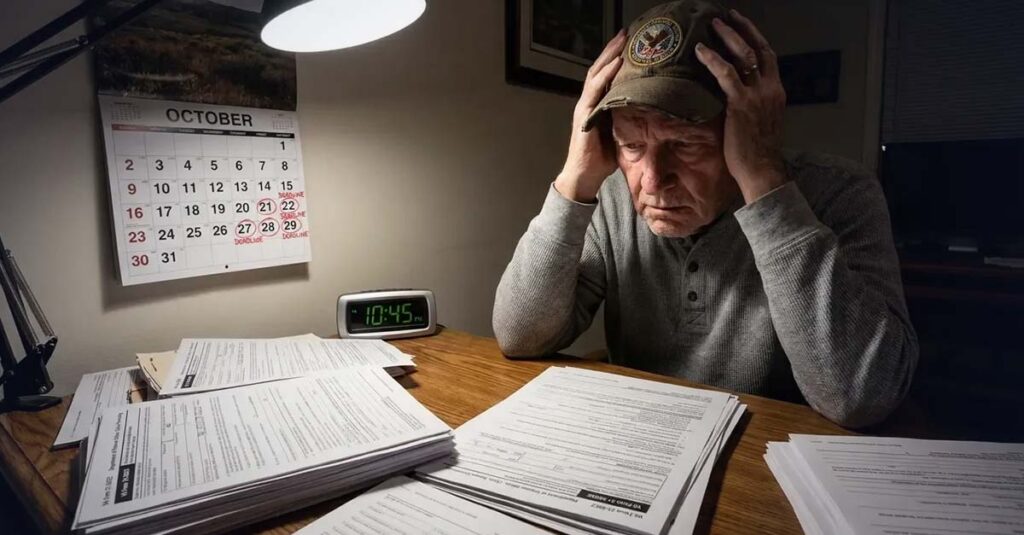
This timing can create significant complications when claim deadlines are involved. A Marine Corps veteran who submitted VA Form 21-22a designating a VSO after receiving an evidence request with a 30-day deadline found that the form took six business days to process. By the time the VSO gained access, only 22 days remained. The first week was spent reviewing service records and understanding the claim; the VSO then rushed to gather buddy statements and supporting materials. The claim was ultimately denied, requiring a supplemental claim that may have been avoidable had representation been established before the evidence request was issued.
What Occurs During the First 48 Hours After Submission
Within the first 48 hours after VA Form 21-22a is submitted, the VA’s system sends automated notifications to several parties — none of which include you. Your designated representative receives a notification that they have been designated, containing your name and VA file number but not the details of your pending claims. Your prior representative, if applicable, receives a termination notice with a 48-hour window to download case materials before access is revoked. Various VA offices with jurisdiction over active claims are updated in their internal tracking systems.
Because you are not included in this notification loop, the burden of verification falls on you. The following actions should be completed within the first 48 hours of submission:
- Confirm your submission was received by checking VA.gov for a confirmation number (for digital submissions) or by contacting your regional office (for paper submissions)
- Contact your new representative directly to confirm they received notification and are prepared to represent you
- Forward copies of all recent VA correspondence to your new representative, including any pending evidence requests or scheduled examination notices
- Document all approaching deadlines and provide them to your representative in writing
- Contact your prior representative, if applicable, to confirm they received the termination notice and to request any work-in-progress documents or case notes
Your prior representative has no obligation to brief your new representative on the status of ongoing work. The VA does not facilitate this handoff. If your previous representative had developed a legal theory, gathered expert opinions, or prepared materials for an upcoming hearing, that institutional knowledge must be transferred through direct coordination — not through the VA’s administrative process.
How VA Form 21-22a Interacts With Existing Representation
VA Form 21-22a operates on a most-recent-submission basis. The most recently processed valid form determines who your representative of record is, and it replaces any prior representation rather than supplementing it. Veterans cannot hold two simultaneous VA representatives of record through this process; only one may be designated at a time for VA claims purposes.
When representation transitions occur mid-claim, the new representative inherits the appeal or claim exactly as it currently stands. They receive no briefing from the prior representative, cannot access the prior representative’s case notes or strategy documents, and are not informed about what evidence has been gathered or what approach was being developed. Starting from scratch in a complex claim produces real delays. An Army veteran who switched representatives eight months into a traumatic brain injury claim found that his new attorney — unaware of the neuropsychological testing and service records analysis the prior attorney had completed — ordered duplicate testing and pursued a different service connection theory. The claim was delayed by six months, and costs were incurred for testing that had already been performed.

Veterans who are considering switching representation should request a complete copy of their case file from their current representative before submitting a new VA Form 21-22a. Although case files are the representative’s property, most will provide copies upon request. Receiving this documentation before the transition ensures continuity rather than requiring the new representative to rebuild from nothing.
Digital vs. Paper Submission: Practical Differences
Digital submission through VA.gov reduces processing time approximately by half compared to mailed paper forms. Digital submissions enter the VA’s system immediately, bypass physical handling and scanning, and trigger automated validation that catches errors before manual review. They also provide real-time submission confirmation and status tracking through VA.gov.
Paper forms offer flexibility in complex situations — they allow for attached documentation and explanatory letters, and some representatives prefer them when unusual circumstances cannot be accommodated within the form’s fields. Error patterns differ between the two methods: digital submissions have lower rates of incomplete forms because the portal enforces required fields, but higher rates of database mismatch errors when entered information does not precisely match the VA’s records. Paper submissions have higher rates of missing signatures and dates, but lower rates of mismatch errors because VA employees manually correct minor discrepancies during processing.
For most standard cases, digital submission is preferable for its speed and trackability. Paper submission is more appropriate when additional documentation needs to accompany the form, when the representative’s information cannot be correctly displayed in the VA.gov portal, or when the veteran does not have a verified Login.gov or ID.me account and the verification process would take longer than physical submission.

When Multiple VA Forms 21-22a Exist in One File
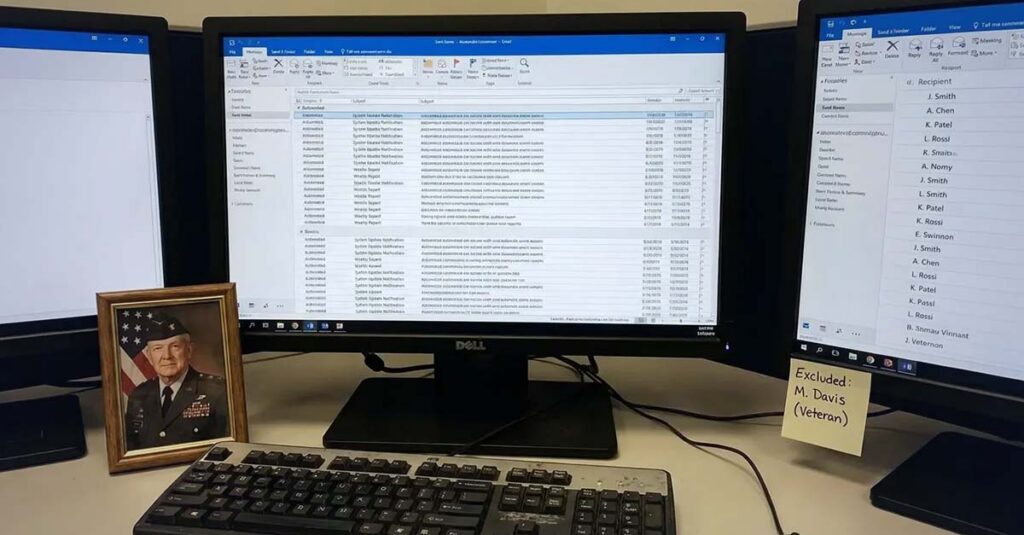
Veterans end up with multiple VA Forms 21-22a in their files through a range of circumstances — submitting a form designating a VSO and then a second designating an attorney without confirming the first was formally superseded, a family member submitting a form while the veteran simultaneously submits one independently, or a law firm submitting a form at the same time the veteran submits one directly.
The VA’s processing system flags files with multiple active forms and routes them for manual review to determine which form takes precedence. During this review — which can take anywhere from a few days to several weeks — no one has active representative access. The claim continues to process, and any VA deadlines during this period remain the veteran’s responsibility regardless of the access suspension.
A Navy veteran experienced this when his spouse mailed a paper authorization form to their regional office on the same day the veteran submitted a digital form through VA.gov. The digital form processed first, granting VSO access. When the paper form arrived, the system flagged the conflict and suspended the VSO’s access pending manual review. The attorney named on the paper form had never agreed to represent the veteran. It took approximately five weeks in total to resolve, ultimately requiring a third form revoking both designations and re-designating the VSO.
Prevention is more effective than resolution. Before submitting a new VA Form 21-22a, confirm the current status of any existing representation through VA.gov or by contacting your regional office. If existing representation needs to be formally terminated, submit a revocation, wait for processing confirmation, then submit the new designation as a separate step.
The Automated Notification Gap and What It Means for You
The VA’s post-submission notification system communicates with your representative and prior representative but does not copy you on those communications. Your new representative receives confirmation of their designation without receiving details about your pending claims. Your prior representative receives a termination notice without knowing who is replacing them. You receive no confirmation that the form processed correctly, that access was granted, or that prior access was revoked.
This structure requires manual verification on your part. After submitting VA Form 21-22a, wait three to five business days, then contact your representative directly to confirm they have received notification and have active access to your file. A form can be delayed in processing, flagged for a conflict, or rejected for a technical reason without any outward indication to the veteran.
You should also verify termination of prior representation when applicable. Contacting your former representative to confirm they received the termination notice prevents situations where your previous representative continues working on your case without knowing they have been replaced — or where they hold information relevant to your new representative but have no mechanism to transfer it.
Timing Considerations When Submitting VA Form 21-22a
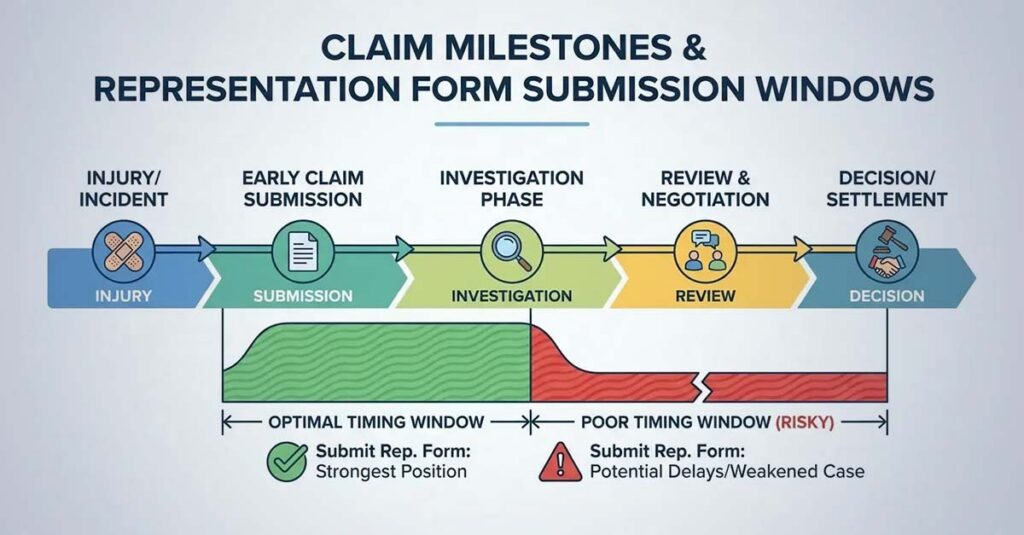
The timing of VA Form 21-22a submission relative to claim milestones significantly affects whether representation adds value or introduces delay. The processing window creates a period during which your claim moves forward without representative involvement, and if that window overlaps with an evidence request deadline, a scheduled compensation and pension examination, or a decision letter, the representative cannot engage with those events effectively.
The least favorable time to submit is immediately after the VA issues an evidence request with a short deadline. If processing takes seven to ten days, the representative has 20 days or fewer to review your complete file, assess the claim, gather necessary evidence, and submit a response. Many representatives will not accept cases under these time constraints.
The most favorable time to submit is before filing the initial claim, or immediately after filing but before the VA takes any action. This gives your representative adequate time to review service records, identify all potential contentions, gather supporting evidence, and contribute to a complete initial submission. It’s possible that claims filed with representative involvement from the outset may have higher initial approval rates because the submission includes documentation the VA needs to make a decision without issuing further development requests.
If you are mid-claim, the next best opportunity is during a stable period — after responding to an evidence request and before the VA issues a decision. This provides time for the representative to review what has been submitted, identify gaps, and prepare for likely next steps.
For appeals, VA Form 21-22a should be submitted promptly after a denial is received. Veterans typically have one year to file a supplemental claim or request higher-level review, and 60 days to file a Board appeal. Waiting until late in the appeal window produces outcomes comparable to submitting immediately before an evidence deadline.
Revoking Representation
Revoking representation requires submitting the same form used to establish it, with the section indicating self-representation completed. The VA processes revocations within 24 to 48 hours for digital submissions, after which the representative’s access terminates and they receive an automated notification. No approval is required from the representative, and no explanation needs to accompany the form.
Revocation does not pause the claims process. Any pending evidence requests or scheduled examinations become immediately the veteran’s responsibility. The VA does not adjust timelines based on changes in representation status.
Veterans working with attorneys or accredited claims agents under fee agreements should be aware that revoking VA Form 21-22a through the VA does not automatically terminate private contractual obligations. Fee arrangements are governed by the terms of the agreement with the representative. Revoking access through the VA and terminating a private legal agreement may require separate and distinct actions.
Understanding how VA disability ratings work and what role your representative plays in developing the evidentiary record can inform the decision about whether and when to revoke representation, and whether any gap in representation would materially affect your claim timeline.
How VA Form 21-22a Affects Your VA.gov Access
Designating a representative through VA Form 21-22a modifies your VA.gov experience in ways the VA does not clearly communicate before submission. Basic claim status information — current phase, rated disabilities, and issued decision letters — remains accessible. What changes is the VA’s expectation that evidence submission and formal communications route through your representative rather than directly from you.
Veterans retain the ability to upload documents through VA.gov after designating representation, but doing so without coordinating with the representative creates risk. A representative submitting evidence based on their independent file review may not know you have also uploaded materials, potentially resulting in submissions that are duplicative or inconsistent. The VA may also redirect certain notifications and status updates to your representative rather than to you directly.
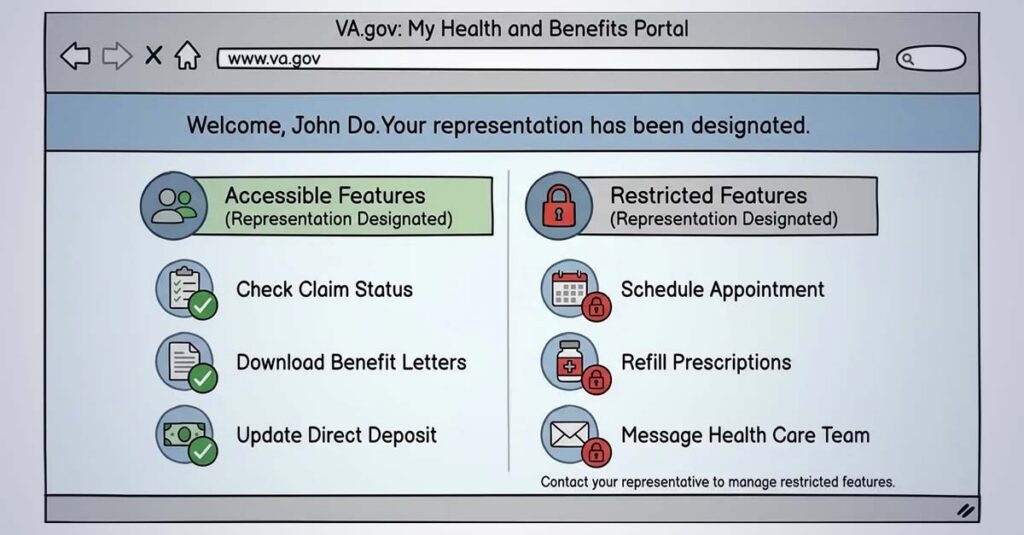
Your representative accesses your claims information through the Veterans Benefits Management System (VBMS), a separate platform from VA.gov. VBMS provides access to your complete claims file, including documents that may not appear in your VA.gov portal. Conversely, certain communications — appointment reminders, direct messages from VA staff, and personalized notifications — appear in your VA.gov account but are not visible to your representative through VBMS. Neither party has a complete, unified view of all claim-related activity, which makes active and consistent communication between you and your representative essential.
How REE Medical Supports Veterans During the Post-Submission Period
The interval between submitting VA Form 21-22a and your representative gaining full file access does not need to be a period of inactivity. Medical evidence development — including independent medical examinations, nexus letters, and DBQs — can proceed during this window regardless of where the representation authorization stands in processing.
REE Medical coordinates access to independent, licensed healthcare professionals who complete DBQs and medical evaluations in accordance with VA formatting and documentation standards. Providers in REE Medical’s network are familiar with disability-focused documentation, with the objective of ensuring that a veteran’s medical evidence accurately and completely reflects the scope of their conditions before the VA conducts its evaluation.
When a representative gains access and reviews the file, current and well-structured independent medical documentation already in place allows them to assess the evidentiary record and identify any remaining gaps rather than starting evidence development from scratch. Veterans can learn more about DBQs for securing VA benefits and how independent medical documentation supports the claims process.
Final Considerations
VA Form 21-22a is administratively straightforward but strategically consequential. The form initiates a processing pipeline that takes three to seven business days for digital submissions and up to three weeks for paper forms — a window during which your claim continues advancing but your representative cannot yet engage. The VA’s notification system operates in the background without informing you of processing status, and the burden of verifying successful completion and establishing active communication with your representative falls on you.
Submitting the form at the appropriate point in your claim timeline, understanding what your representative can and cannot access once designation is established, and maintaining active involvement in your claim even with representation in place are the factors that determine whether VA Form 21-22a produces the outcome you intended. Understanding what evidence is needed for disability claims before and during the representation process ensures that your representative has the documentation needed to engage effectively from the moment access is granted.
DISCLAIMER: REE Medical, LLC is not a Veterans Service Organization (VSO) or a law firm and is not affiliated with the U.S. Veterans Administration (“VA”). Results are not guaranteed, and REE Medical, LLC makes no promises. REE Medical’s staff does not provide medical advice or legal advice, and REE Medical is not a law firm. Any information discussed, such as, but not limited to, the likely chance of an increase or service connection, estimated benefit amounts, and potential new ratings, is solely based on past client generalizations and not specific to any one patient. The doctor has the right to reject and/or refuse to complete a Veteran’s Disability Benefit Questionnaire if they feel the Veteran is not being truthful. The Veteran’s Administration is the only agency that can make a determination regarding whether or not a Veteran will receive an increase in their service-connected disabilities or make a decision on whether or not a disability will be considered service-connected. This business is not sponsored by, or affiliated with, the United States Department of Veterans Affairs, any State Department of Military and Veterans Affairs, or any other federally chartered veterans service organization.