

What You Need to Know About VA Hearing Loss Ratings
Per the Department of Veterans Affairs (VA), hearing loss ratings are determined through a detailed evaluation process outlined in 38 CFR § 4.85. War is loud, but the compensation process shouldn’t be equally confusing. Many veterans receive 0% ratings while others with similar hearing loss receive 30% or higher. Differences in outcomes often reflect how the VA’s standardized evaluation criteria apply to each veteran’s documented results.
The Real Story Behind VA Hearing Ratings
The VA evaluates hearing loss using a specific formula that combines hearing thresholds at different frequencies with speech discrimination ability. This explains why two veterans with similar hearing loss can receive completely different ratings.
- Ratings are determined by three factors:
- Pure tone thresholds at five specific frequencies
- Speech discrimination scores (word recognition ability)
- Which ear experiences more severe impairment
The VA’s system is more nuanced than many expect. Veterans might have significant hearing loss but still receive a low rating if speech understanding remains adequate. Conversely, mild hearing loss on paper combined with difficulty understanding conversations in noisy environments could result in a higher rating. The specific frequency ranges where hearing loss is most severe significantly impact the final rating.
According to the Department of Veterans Affairs, more than 1.3 million veterans received compensation for hearing loss in 2020 and over 2.3 million veterans were compensated for tinnitus during the same year from Hill & Ponton, making hearing-related conditions one of the most commonly claimed service-connected disabilities among American veterans.

How the VA Actually Calculates Ratings
Diagnostic Code 6100 under 38 CFR § 4.85 governs how the VA evaluates hearing loss claims. The system requires pure tone audiometry results at specific frequencies (500, 1000, 2000, 3000, and 4000 Hz) combined with speech discrimination percentages.
The VA doesn’t simply average hearing loss measurements. Instead, the system uses a specific formula that weighs certain frequencies more heavily than others. Speech recognition problems can dramatically impact final ratings even when pure tone results appear mild on paper.
Per the VA, overall compensation amounts are calculated using published rating schedules that correspond to verified diagnostic results. Here are some figures for veterans without dependents for the 2025 VA disability compensation rates pertaining to hearing loss.
| VA Disability Rating | Monthly Compensation (2025) | Typical Hearing Loss Description |
| 0% | $0 | Non-compensable hearing loss |
| 10% | Non-compensable | Mild hearing loss, some difficulty in noisy environments |
| 30% | $537.42 | Moderately severe hearing loss, significant difficulty in most situations |
| 40% | $774.16 | Severe hearing loss, cannot understand speech without amplification |
| 50% | $1,102.04 | Profound hearing loss, extreme difficulty even with hearing aids |
| 60% | $1,395.93 | Near-total hearing loss in both ears |
| 100% | $3,831.30 | Total deafness in both ears |
Source: VA Claims Insider compensation rates for veterans without dependents
Why Your Audiogram Matters More Than Many Realize
The VA uses audiogram results in a weighted formula. Small changes in specific frequency ranges can push results into different rating brackets. This explains why accurate testing conducted by licensed audiologists familiar with VA documentation standards ensures that results meet evaluation criteria.
Pure tone averages are calculated by adding hearing thresholds at 1000, 2000, 3000, and 4000 Hz, then dividing by four. This average, combined with speech discrimination percentages, gets applied to VA Table VI to determine ratings for each ear.
According to VA-published data cited by VA Claims Insider, the challenge veterans face is evident in the statistics: the average VA rating for Hearing Loss is 10%, and many veterans have a 0% rating, if service connection is established at all, according to VA Claims Insider, despite hearing loss being among the most claimed VA disabilities.
Speech Recognition: The Critical Factor
While pure tone thresholds measure the ability to hear different pitches, speech discrimination testing reveals how well veterans actually understand spoken words—and this often becomes the limiting factor in daily life. Veterans might hear someone talking but struggle to understand what they’re saying, especially in noisy environments.
Poor speech discrimination can result in a higher rating category even when pure tone averages seem relatively good on paper. Here’s a scenario: “John,” a veteran who worked around military aircraft, has pure tone averages showing only mild hearing loss at 35 dB, but his speech discrimination scores are 76% in his right ear and 82% in his left ear due to years of jet engine noise exposure. Despite relatively “good” hearing thresholds, his poor speech recognition could result in a 30% VA rating because understanding conversations in restaurants, meetings, and other daily situations where background noise is present becomes difficult.

The Medical Evidence That Actually Matters
The VA requires comprehensive documentation that meets specific standards when evaluating hearing loss claims. Audiological testing must be conducted in a sound-treated booth using calibrated equipment, and results need to be presented in a format that VA raters can easily interpret.
Beyond technical requirements, according to the VA, establishing service connection requires documentation such as military records and verified exposure evidence, noise exposure documentation, or buddy statements that describe the hazardous conditions faced during service. When considering the strength of a claim, the importance of medical evidence in VA disability claims cannot be overstated, particularly for conditions where objective testing is crucial.
The importance of proper documentation has become even more critical following the 3M Combat Arms Earplug litigation, where internal testing revealed that 3M was aware of problems but failed to warn users according to Drugwatch.com. This massive lawsuit, involving approximately 260,000 affected veterans, highlighted how defective hearing protection led to widespread hearing damage during the Iraq and Afghanistan conflicts, making service connection documentation crucial for affected veterans.
Understanding Online Hearing Disability Calculators
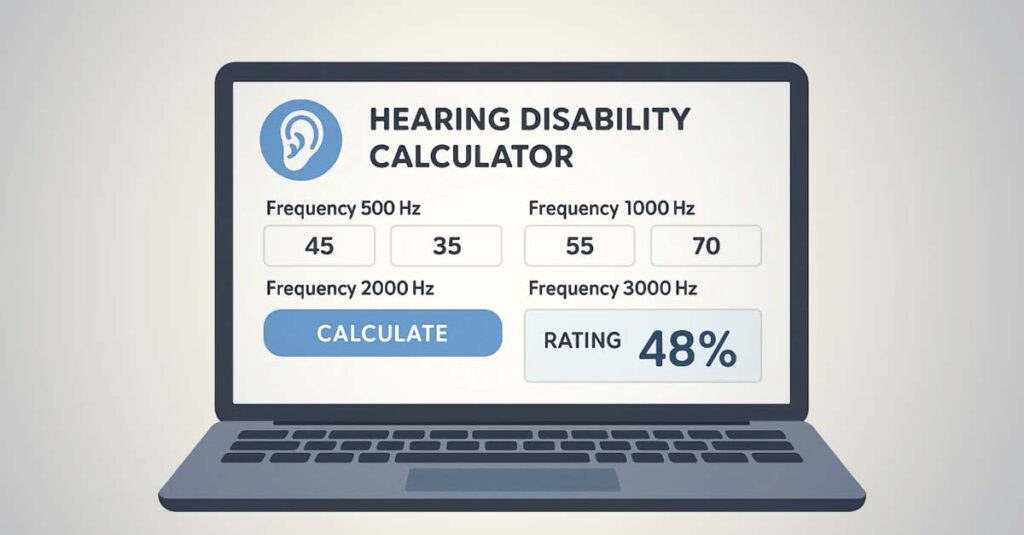
Online calculators can provide a rough estimate of potential ratings, but these tools have significant limitations. These tools follow a straightforward process: pure tone averages for each ear are input, speech discrimination percentages are added, and any tinnitus ratings are included. The calculator then estimates combined disability ratings using the VA’s standard formulas.
What These Calculators Miss
The biggest limitation of online calculators is their inability to account for possible secondary conditions beyond basic tinnitus ratings. They don’t factor in balance problems, social isolation, employment difficulties, or other functional limitations that might influence a VA rater’s decision.
Additionally, calculators assume audiological testing meets VA standards—if hearing tests are conducted in a regular doctor’s office rather than a sound-treated booth, the results might not be acceptable to the VA regardless of what the VA hearing disability calculator shows.
Most importantly, they can’t replace the clinical judgment of a qualified audiologist who understands how to document cases accurately while addressing all relevant factors.
Here’s another scenario: “Sarah,” a veteran, uses an online calculator that predicts a 10% rating based only on her audiogram results. However, an independent exam with an audiologist familiar with the VA’s rating system documents that her hearing loss is accompanied by severe balance issues and social anxiety due to her communication difficulties. When the audiologist documents these secondary conditions, Sarah could ultimately receive a combined 50% rating: 10% for hearing loss, 10% for tinnitus, and additional ratings for balance disorder and anxiety secondary to her hearing impairment.

Documentation and the Claims Process
The VA bases hearing loss ratings on accurate and thorough medical evidence reviewed within its evaluation timelines. According to the VA, submitting a complete package initially rather than adding evidence piecemeal can support more efficient processing and clarity regarding effective dates for rating purposes.
Understanding what determines VA ratings—including factors beyond medical evidence—clarifies how final decisions are made.
A Complete Evidence Package
According to the VA, evidence packages typically include documentation linking verified in-service exposure with current medical findings. Documentation often includes DD-214 and military personnel records as foundational elements, according to the VA. The VA considers training records, deployment documentation, and safety reports referencing noise hazards as supporting evidence when reviewing claims.
Buddy statements from fellow service members describing noisy conditions may hold evidentiary weight with VA raters when official documentation is limited.
When service records lack hearing-related entries, the VA may consider evidence of noise exposure alongside a current diagnosis and an independent medical evaluation documenting their relationship.
Standards for Audiological Evaluations
Not all audiological evaluations meet VA standards. According to VA requirements, hearing tests must be conducted by a licensed audiologist in a sound-treated environment using calibrated equipment. According to the VA, reports are expected to include pure tone thresholds at all required frequencies, speech discrimination scores, and a clear diagnosis of hearing loss type and severity.
Licensed audiologists familiar with VA documentation standards often provide medical reports that clearly describe functional limitations relevant to VA review.
| Test Component | VA Requirement | Why It Matters |
| Pure Tone Audiometry | Frequencies: 500, 1000, 2000, 3000, 4000 Hz | Determines Roman numeral designation for each ear |
| Speech Discrimination | Maryland CNC test with 50 phonetically balanced words | Critical for final rating calculation |
| Testing Environment | Sound-treated booth with calibrated equipment | Ensures accurate, VA-acceptable results |
| Examiner Qualification | Licensed audiologist | Required for VA to accept results |
| Documentation Format | Detailed report with diagnosis and functional impact | Supports both rating and service connection |
According to the VA, veterans can find official guidance on requesting a disability rating review or increase at VA.gov.
What Happens After Claim Submission
Once claims are submitted, the VA reviews evidence. According to the VA, when evidence is incomplete or does not meet VA standards, a Compensation & Pension (C&P) examination will likely be scheduled.

Why Many Claims Face Challenges
The majority of hearing loss claims face challenges not because veterans don’t qualify, but because of preventable issues with evidence quality, service connection establishment, or understanding of the rating process. Common reasons for VA disability claim denials often apply to hearing loss cases, underscoring the importance of complete documentation.
Secondary Conditions Often Go Undocumented
Hearing loss rarely exists in isolation—it often causes or contributes to other conditions that could be separately rated and compensated. Tinnitus is the most common secondary condition, but balance problems, social isolation, depression, anxiety, and sleep disturbances can result from hearing difficulties.
The prevalence of secondary conditions is significant among veterans with hearing issues. According to the Hearing Health Foundation, veterans with tinnitus also suffer from anxiety and depression. One 2015 study found that 58 percent of veterans with tinnitus had both conditions from the Veterans Guide, demonstrating the interconnected nature of hearing-related disabilities.
Documentation showing how hearing loss affects other aspects of health and daily functioning can be valuable. Symptom diaries noting balance problems, social situations avoided due to hearing difficulties, sleep disruption from tinnitus, or mood changes related to communication struggles can contribute to evidence packages. Each secondary condition requires its own evidence package, but the impact on total compensation can be substantial.
When Ratings Don’t Match Functional Impact
Some veterans find their VA rating doesn’t seem to match the severity of their hearing loss or its impact on daily life. This disconnect often occurs when the VA’s mathematical formula doesn’t capture the full extent of functional limitations, or when hearing loss patterns don’t fit neatly into rating categories.
The VA’s rating formula works well for typical hearing loss patterns, but it can underrate veterans with unusual frequency patterns, fluctuating hearing loss, or significant functional limitations that don’t show up clearly in standard testing. If a rating appears lower than the reported daily impact, functional capacity evaluations or additional medical opinions may help the VA assess the full scope of hearing-related limitations.
Here’s another scenario: “Mike,” a veteran, received only a 10% rating despite profound difficulty functioning in his job as a construction supervisor. His audiogram shows moderate hearing loss, but his records don’t adequately document that his specific pattern of high-frequency loss makes it impossible for him to hear safety warnings on job sites.
After obtaining an independent medical evaluation detailing occupational limitations and safety risks, additional VA review could result in an adjusted rating.
How REE Medical Coordinates Documentation
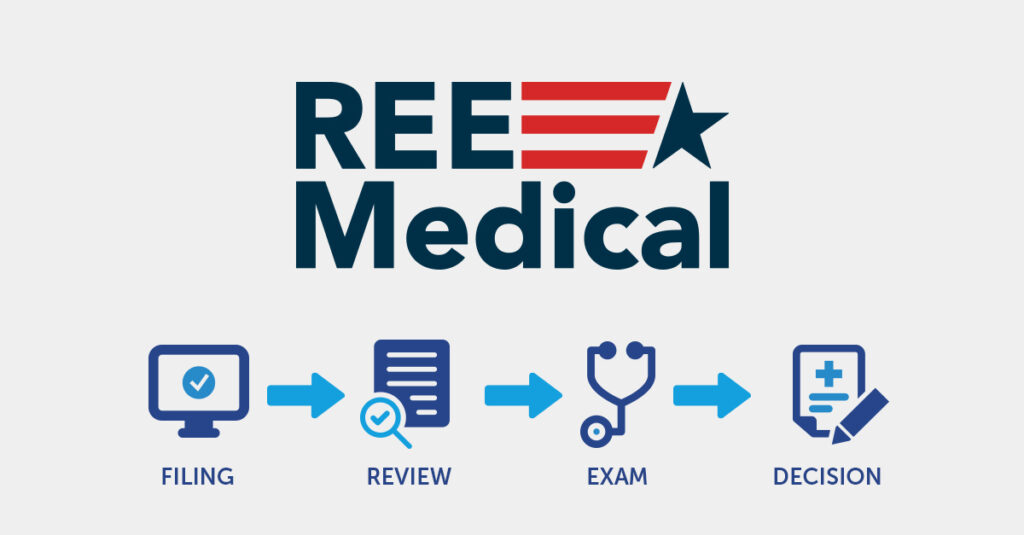
When service records and post-service evaluations seem incomplete, and additional accurate and thorough medical evidence is needed, REE Medical coordinates connections between veterans and independent, licensed audiologists who prepare documentation consistent with VA standards.
REE Medical connects veterans with independent, licensed medical professionals who provide thorough, accurate DBQs. REE Medical does not prepare, present, or prosecute VA disability claims; all rating decisions are made solely by the Department of Veterans Affairs.
For veterans experiencing inadequate medical documentation or uncertainty about what evidence their disability claim requires, particularly for complex conditions that require specialized testing, REE Medical’s approach addresses many of these issues.
REE Medical’s flat-rate services provide thorough documentation without hidden fees or commission-based charges, making professional medical evidence accessible when comprehensive documentation is needed. Whether addressing an initial claim for unrated hearing loss or seeking documentation for conditions that have worsened over time, expertise in aligning medical evidence with VA Rating Schedule requirements can influence the difference between denials and accurate compensation determinations.
This can be especially valuable for rating increases related to worsening hearing loss or when initial exams didn’t adequately capture functional limitations. REE Medical coordinates independent evaluations completed by licensed medical professionals who follow VA rating standards and documentation formats.
Veterans can contact REE Medical for a complimentary informational consultation to learn about how independent medical documentation for hearing loss evaluations is coordinated.
Bottom Line
Understanding VA ratings for hearing loss comes down to comprehending the system and meeting documentation requirements properly. Hearing loss experienced during military service is a well-recognized condition; establishing service connection depends on VA-verified evidence.
The frustrating aspect of this process is how many deserving veterans receive lower ratings than their conditions warrant because the system’s specific requirements and nuances aren’t widely understood. Per the VA, differences in rating percentages often reflect whether the medical evidence meets formatting and documentation standards set by the agency.
The VA’s rating system has specific requirements, but these aren’t impossible to meet when veterans understand what documentation is needed. Proper medical evidence, documentation of functional limitations, and awareness of secondary conditions that might qualify for additional compensation all contribute to accurate rating determinations.
Inadequate documentation or insufficient examinations can result in ratings that don’t reflect the actual impact of hearing loss on daily life. The VA bases its evaluations on comprehensive and accurate medical documentation that explains how hearing loss affects daily functioning.
DISCLOSURE
REE Medical, LLC is not a Veterans Service Organization (VSO) or a law firm and is not affiliated with the U.S. Veterans Administration (“VA”). Results are not guaranteed, and REE Medical, LLC makes no promises. REE Medical’s staff does not provide medical advice or legal advice, and REE Medical is not a law firm. Any information discussed, such as, but not limited to, the likely chance of an increase or service connection, estimated benefit amounts, and potential new ratings, is solely based on past client generalizations and not specific to any one patient. The doctor has the right to reject and/or refuse to complete a Veteran’s Disability Benefit Questionnaire if they feel the Veteran is not being truthful. The Veteran’s Administration is the only agency that can make a determination regarding whether or not a Veteran will receive an increase in their service-connected disabilities or make a decision on whether or not a disability will be considered service-connected. This business is not sponsored by, or affiliated with, the United States Department of Veterans Affairs, any State Department of Military and Veterans Affairs, or any other federally chartered veterans service organization.