
VA Rating for Scars: Understanding How the VA Evaluates Skin Damage and Functional Impact
Scars are far more than surface-level reminders of service—they can affect movement, sensation, confidence, and long-term health. Yet many veterans don’t realize how detailed the VA’s evaluation process is or how much the underlying tissue, location, and functional impact of a scar can influence their potential VA rating for scars. This guide examines how the VA evaluates scar characteristics, what qualifies as disfigurement, and why facial symmetry, depth, and pain play such a major role in final ratings. Understanding these criteria clarifies what documentation the VA reviews when determining condition severity.
Executive Summary
Depth matters: Deep scars involving muscle or nerve damage rate higher than superficial ones. Location dictates criteria: Facial scars are rated on disfigurement; body scars are rated on size (surface area). Measurements are mandatory: When examiners estimate scar size instead of measuring precisely, ratings may be inaccurate. Secondary claims exist: Scars can lead to rated mental health issues or limited range of motion. 0% isn’t a failure: A non-compensable rating still opens access to VA healthcare for that specific issue.

How the VA Evaluates Scars
The VA uses the General Rating Formula for Scars, primarily under diagnostic codes 7800 through 7805. Many veterans assume their scars are purely cosmetic issues, but the VA evaluates functional impact on the skin and underlying tissues. Ratings depend heavily on tissue characteristics, depth, and the total area affected. Understanding 2026 VA disability compensation rates provides context for how percentages translate to monthly benefits.
The Difference Between Deep and Superficial
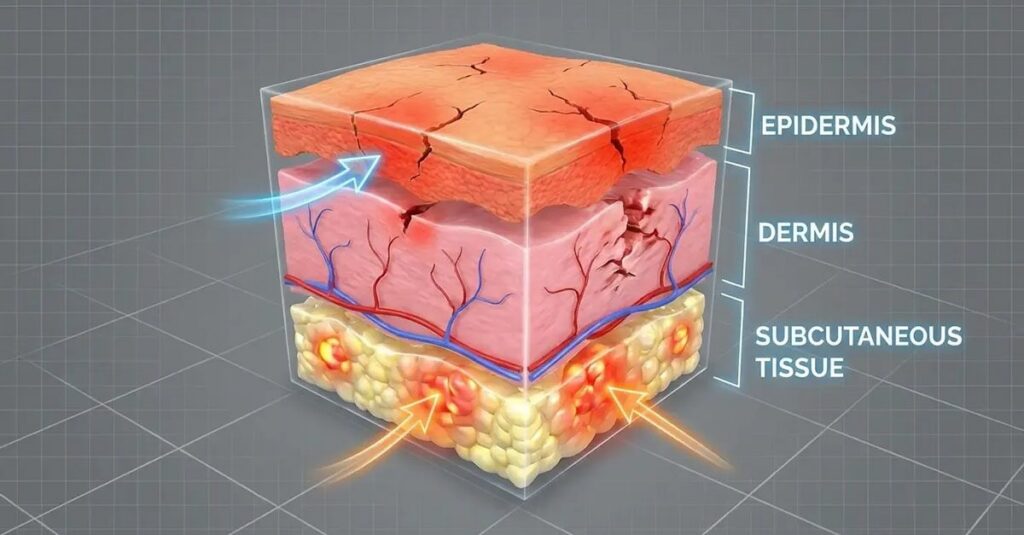
The VA’s definitions of “deep” versus “superficial” drive potential ratings. Deep scars generally result in higher compensation because they involve more than just the top layer of skin.
Underlying Tissue Damage
A deep scar involves underlying soft tissue damage. This includes damage to the fascia, muscles, or other structures beneath the dermis, not simply surface-level scratches.
Nerve Damage Indicators
Deep scarring often disrupts sensory nerves. Veterans might experience numbness, hypersensitivity, or a prickly sensation in the scarred area, which serves as evidence of depth.
Disfigurement Criteria
Disfigurement is the primary metric for scars on the head, face, or neck. While appearance is somewhat subjective, the VA relies on specific observable traits to determine if a scar meets criteria for higher ratings.
| Characteristic of Disfigurement | Description |
| Scar Length | The scar is 5 or more inches long |
| Scar Width | The scar is at least 1/4 inch wide at the widest part |
| Surface Contour | The scar creates an elevation or depression in the skin surface |
| Adherence | The scar tissue is adhered to the underlying soft tissue |
| Color Contrast | Hypopigmentation or hyperpigmentation affecting an area of 6+ square inches |
| Texture Change | Irregular, atrophic, or shiny skin texture over an area of 6+ square inches |
| Missing Tissue | Underlying soft tissue loss affecting an area of 6+ square inches |
| Hardness | Induration (hardening) of the skin over an area of 6+ square inches |
Missing Tissue and Distorted Features
High ratings often require visible tissue loss. This means the scar has caused a gross distortion of facial features like the nose, lips, or ears.
Surface Irregularities
Surface irregularities play a major role. Scars that are significantly raised (elevated) or depressed (indented) compared to surrounding healthy skin are evaluated for disfigurement level.
Pigment Changes
Pigment changes are a rating factor. Hypopigmentation (lightening) or hyperpigmentation (darkening) that creates a stark contrast with natural skin tone contributes to the disfigurement level.
Scars With Pain or Instability
Size isn’t the only consideration. A scar can be rated based on instability or pain. When the scar is tender to the touch or prone to breaking down, it falls into a specific category of disability.
Chronic Ulceration
An unstable scar frequently ulcerates. This means the skin breaks down without external cause, fails to heal properly, and often requires medical intervention to close.
Location-Based Rating Criteria
The VA divides scar ratings into two main categories: the face (head/neck) and the rest of the body. Facial scars are rated on how they change appearance, while body scars are calculated based on surface area.
Rating Scars on the Head, Face, and Neck
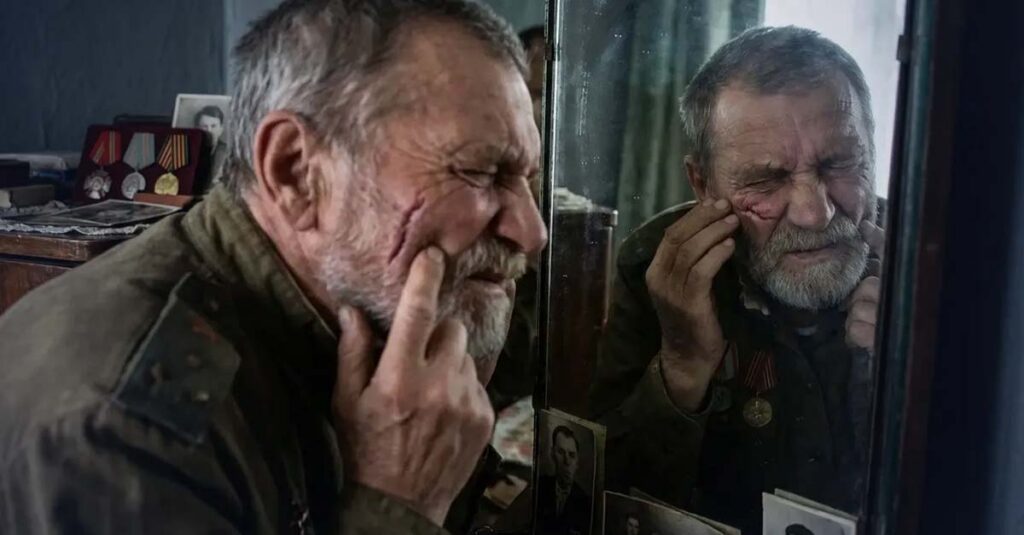
Diagnostic Code 7800 governs these areas. Ratings range from 10% to 80%, depending entirely on the severity of disfigurement and how many features are distorted.
The 80% Rating: Extreme Disfigurement
This is the highest threshold. It applies when scarring renders the face severely disfigured or involves severe tissue loss that grossly distorts features.
The 50% and 30% Ratings: Severe to Moderate Impact
A 50% rating involves severe disfigurement where one feature is grossly distorted. A 30% rating applies when there is visible tissue loss and gross distortion, but to a lesser degree.
Example: The Impact of Distortion
Veteran Mark has a burn scar that pulls his left eyelid down (asymmetry/distortion of one feature) and has visible tissue loss on his cheek. Because he has tissue loss and gross distortion of one feature (the eye), he would likely meet criteria for a 30% rating under Diagnostic Code 7800. If the scar also distorted his nose, affecting two features, he could advance to 50%.
The 10% Rating: Noticeable Marks
A 10% rating applies to one or more scars that cause noticeable disfigurement. These do not need to involve gross distortion or massive tissue loss, just a visible change.
Facial Symmetry Evaluation
Examiners evaluate how the scar affects facial symmetry. They specifically examine the nose, chin, forehead, eyes, ears, cheeks, and lips to determine if the balance of the face is disturbed.
Surgery Scars and Body Markings
Scars on the trunk and extremities fall under Diagnostic Codes 7801 and 7802. These ratings are calculated based on the total square inches or centimeters of scar tissue.
Surface Area Measurement
According to the VA, examiners measure the length and width of the scar. Estimations lead to inaccuracies. The total surface area determines the rating.
Example: The Surface Area Calculation
Veteran Sarah has a deep surgical scar on her back from a service-connected spinal fusion. The scar is 10 inches long and 1.5 inches wide.
Math: 10 inches x 1.5 inches = 15 square inches.
Result: Because the scar is deep (underlying tissue damage) and falls between 12 and 71 square inches, Sarah qualifies for a 20% rating (based on general rating criteria for deep scars). When examiners estimate size without measuring, ratings may be lower than warranted.
Size Thresholds for Deep Body Scars
Deep scars on the body typically start at a 10% rating for an area of 6 to 12 square inches. When the area exceeds 144 square inches, the rating can reach 40%.

Evidence Requirements and Medical Examinations
Precise documentation is necessary for scar claims. Because scars are visual, the quality of evidence and thoroughness of examination dictate outcomes. The guide on what evidence do I need for my disability claim explains what the VA reviews when evaluating claims.
Medical Evidence Components
Records that establish the origin of the scar and its current physical state are required. Without this documentation, the VA cannot verify service connection or severity.
Scar Claim Evidence Components:
- Service Treatment Records: Specific entries (surgery reports, accident reports) showing when the skin injury occurred
- Current Diagnosis: Formal medical diagnosis of the scar (e.g., “Post-surgical scar, painful”)
- Independent Medical Opinion: When the scar isn’t obviously from combat, medical documentation linking the current scar to the in-service event
- Color Photos: High-resolution, well-lit photographs with a ruler in the photo for scale
- Personal Statement (VA Form 21-4138): Written description of the pain, itchiness, or social anxiety the scar causes

Service Treatment Records
Original treatment records are essential. Surgery reports, accident reports, or sick call slips from time in service demonstrate the injury occurred on active duty.
Color Photography
High-quality color photographs provide raters with clear visual evidence of disfigurement, which is especially critical for facial scars where written descriptions might fall short.
Private Medical Opinions
A private physician’s opinion (DBQ) can strengthen claims. An independent doctor will explicitly measure the scar and note subjective symptoms like pain, providing detailed evidence beyond brief VA examinations.
The C&P Examination
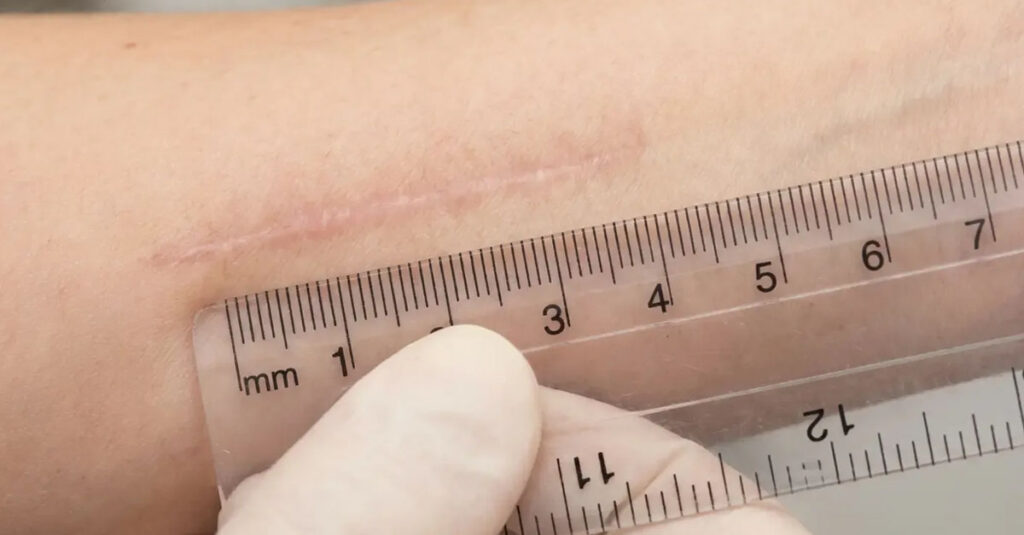
The Compensation & Pension exam is where the VA physician measures scars. E Variations can occur depending on how measurements and symptoms are documented during the exam. Understanding how physicians record their findings through the VA DBQ process explained clarifies what documentation is captured during evaluations.
Measurement Requirements
When examiners physically measure the scar with a ruler or tape, ratings reflect accurate measurements. When examiners visually estimate size, ratings may not reflect actual measurements.
Establishing Service Connection
Veterans demonstrate the link between scars and specific service events. The VA requires a nexus between current disfigurement and military service.

Combat and Training Accidents
Direct service connection applies to scars from combat wounds, IED blasts, vehicle accidents, or training mishaps that occurred during active duty.
Scars from Service-Connected Surgeries
When veterans undergo surgery for a service-connected condition, the resulting scar is ratable. This applies even when the surgery occurred after leaving the military, provided the condition requiring surgery is service-connected.
Secondary Conditions Caused by Scars
Scars often cause other problems. Veterans can receive separate ratings for disabilities that arise as a direct result of scarring.
| Scar Complication | Potential Secondary Rating |
| Tight Skin Over Joint | Limitation of Motion (rated under the specific joint, e.g., Knee or Elbow) |
| Facial Disfigurement | Mental Health Disorders (Anxiety, Depression, Social Phobia) |
| Nerve Entrapment | Peripheral Neuropathy or Neuralgia (rated under neurological codes) |
| Unstable Skin | Skin infections or Dermatitis |
Restricted Range of Motion
Skin tightness can limit movement. When a scar crosses a joint and restricts ability to move it, veterans may qualify for a separate rating based on limitation of motion.

The Mental Health Impact of Disfigurement
Severe disfigurement can lead to depression or anxiety. Veterans can file for these mental health conditions as secondary to the scar, especially when the scar is on the face. The article on the VA rating for depression and what many veterans wish they knew about VA evaluation provides insight on how these conditions are evaluated.
Nerve Entrapment and Pain
Scar tissue can trap nerves. This leads to neuropathy or chronic pain syndromes that extend beyond the skin, warranting separate evaluation.
Chronic Infection Risks
Unstable scars are prone to infection. When scars frequently open and become infected, this complication can be documented in medical records for VA evaluation.

Understanding Compensation Calculations
Understanding how the VA calculates final compensation clarifies expectations. Scar ratings stack differently than other disabilities, and understanding the calculation process is beneficial.
Rating Schedule Structure
Compensation ties directly to the percentage rating. Scars are unique because veterans can receive multiple ratings when they are in different anatomical zones. The current compensation and benefits by VA rating tables show how percentages translate into monthly payments.
Multiple Scar Ratings
Veterans can receive separate ratings for a scar on the face and a scar on the leg. The VA does not pyramid these symptoms; they are treated as distinct disabilities.
Example: Avoiding Pyramiding
A veteran has three separate shrapnel scars on their right thigh.
VA Rule: The VA generally will not rate each of these three scars individually when they are in the same anatomical zone. Instead, the VA combines the surface area of all three scars to generate one single rating for the “Right Thigh.”
Exception: When that same veteran also has a scar on their forehead, the forehead scar is rated separately from the thigh scars because it is a different anatomical region (Head/Face vs. Extremity).
The Value of a 0% Rating
A 0% rating acknowledges the scar is service-connected, which grants access to VA healthcare for that specific issue even when it doesn’t add to monthly compensation.
VA Math and Combined Ratings
The VA uses a combined ratings table. When veterans have multiple ratable scars, the VA doesn’t simply add the numbers (10% + 10% ≠ 20%). The VA uses “VA Math” to determine overall disability percentage.

REE Medical’s Approach to Scar Documentation
The difference between a 0% rating and a compensable one often comes down to examination precision. Scars are subjective in appearance but objective in measurement. VA-appointed examiners might rush through C&P examinations, estimating the size of a scar on the trunk or failing to document that a facial scar causes social anxiety.
REE Medical coordinates access to independent medical professionals who understand DBQ nuances. These providers accurately measure the surface area of scars and document characteristics like tissue loss or instability that might be overlooked. Information about how to challenge a low VA rating is available for veterans seeking reevaluation of a VA disability rating. is available for veterans who believe their current evaluation was inaccurate.
Veterans can learn more about coordinating independent medical documentation by contacting REE Medical for an informational consultation.
Conclusion
Scars represent visible evidence of service, and the VA has established detailed criteria to compensate veterans properly. Whether a surgical scar on a knee limits movement or a facial scar impacts confidence, the details matter. Precise measurement, thorough symptom documentation, and evaluation of every secondary condition contribute to accurate ratings. The VA rating for scars depends on documented depth, location, surface area measurements, and functional impact—all components that require comprehensive medical evidence to support accurate evaluation.
DISCLOSURE
DISCLAIMER: REE Medical, LLC is not a Veterans Service Organization (VSO) or a law firm and is not affiliated with the U.S. Veterans Administration (“VA”). Results are not guaranteed, and REE Medical, LLC makes no promises. REE Medical’s staff does not provide medical advice or legal advice, and REE Medical is not a law firm. Any information discussed, such as, but not limited to, the likely chance of an increase or service connection, estimated benefit amounts, and potential new ratings, is solely based on past client generalizations and not specific to any one patient. The doctor has the right to reject and/or refuse to complete a Veteran’s Disability Benefit Questionnaire if they feel the Veteran is not being truthful. The Veteran’s Administration is the only agency that can make a determination regarding whether or not a Veteran will receive an increase in their service-connected disabilities or make a decision on whether or not a disability will be considered service-connected. This business is not sponsored by, or affiliated with, the United States Department of Veterans Affairs, any State Department of Military and Veterans Affairs, or any other federally chartered veterans service organization.