

VA Form 21-4138: Written Testimony in the VA Claims Process
Every year, thousands of veterans face a common frustration: their disability claims don’t fully capture the reality of living with service-connected conditions. Medical records document diagnoses and treatment, but they often miss the daily struggles, the cascading effects of multiple conditions, and the nuanced ways disabilities impact work, relationships, and quality of life.
VA Form 21-4138 addresses this gap. This “Statement in Support of Claim” allows veterans to provide detailed written testimony that becomes part of their permanent VA file—carrying the same legal weight as sworn statements given under oath. Whether explaining missing service records, describing complex symptom patterns, or establishing connections between conditions, this form provides the space to tell the complete story that standardized forms cannot accommodate.
The challenge lies in understanding when to use this form, how to structure written testimony effectively, and what VA raters actually look for in these statements. With millions of military records destroyed in the 1973 National Archives fire and recent Supreme Court rulings placing more weight on initial evidence, strategic use of VA Form 21-4138 has never been more important for veterans navigating the disability claims process.
This comprehensive overview explores the fundamentals of VA Form 21-4138, specific scenarios where written statements become essential, strategic completion techniques, submission methods, and advanced applications for complex cases. Veterans who understand how to leverage this powerful but underutilized tool can ensure their voices are heard in the VA decision-making process.
TL;DR
- VA Form 21-4138 serves as written testimony in the claims process, carrying the same legal weight as sworn statements
- This form becomes relevant when standard documentation doesn’t capture the full picture of a veteran’s condition
- Strategic preparation and factual language significantly impact how VA raters evaluate written statements
- Electronic submission through VA.gov provides faster processing and immediate confirmation
- Written statements become permanent evidence affecting future claims, increases, and appeals
- Professional medical documentation strengthens written testimony and supports accurate VA evaluation
Understanding VA Form 21-4138 Fundamentals
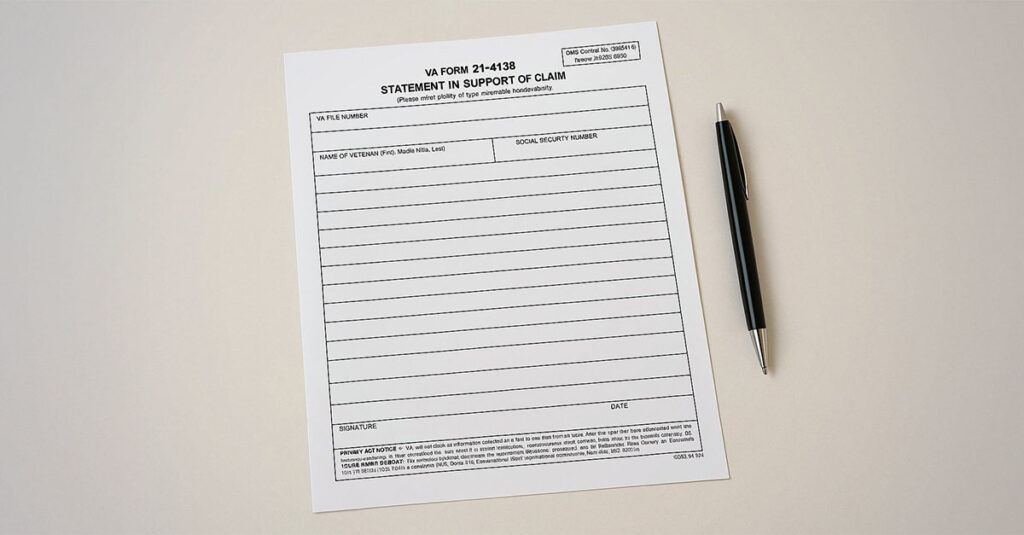
VA Form 21-4138 functions as a supplemental document within the VA claims system, providing space for detailed written testimony when standardized forms fall short. This “Statement in Support of Claim” transforms into sworn testimony that becomes part of the permanent VA file, making it a significant tool for explaining circumstances, symptoms, and impacts that other forms cannot capture effectively.
Veterans may encounter situations where checkbox forms and medical records don’t tell the complete story. That’s exactly where VA Form 21-4138 becomes relevant. Veterans and their families, friends, or other former service members can use this form to provide information to substantiate a disability benefits claim.
The form carries serious legal weight—once submitted, it becomes sworn testimony in the permanent VA file. Every word matters because future raters will reference statements for subsequent claims, increases, or appeals. The form essentially allows veterans to communicate directly with the person making decisions about benefits.
Veterans often struggle with inadequate medical evidence, which makes understanding the importance of medical evidence in VA disability claims crucial when preparing written statements.
Historical Context: The 1973 National Archives fire in St. Louis destroyed approximately 18 million military files, making written statements crucial for veterans whose official records were lost.
What This Form Actually Accomplishes
The primary function of VA Form 21-4138 centers on bridging gaps between lived experience and clinical documentation in the file. It serves multiple critical purposes including explaining daily functional limitations, clarifying medical timeline discrepancies, and establishing service connections when official records prove incomplete or insufficient.
Written statements serve as the bridge between clinical documentation and daily reality. While medical notes might indicate “chronic pain,” VA Form 21-4138 can describe how that pain affects sleep, employment, and relationships.
The form excels at connecting information that medical records leave scattered. Perhaps service medical records mention a minor injury, but they don’t capture how that injury evolved into a debilitating condition years later. VA Form 21-4138 statements fill those crucial gaps.
VA raters use written testimony to understand the human impact behind medical diagnoses. Raters look for specific examples of how conditions affect the ability to work, maintain relationships, and perform daily activities.
| What the VA Evaluates | How Form 21-4138 Addresses It |
| Service connection evidence | Fills gaps in incomplete service records with firsthand accounts |
| Current symptom severity | Describes daily functional limitations not captured in clinical exams |
| Frequency and duration | Documents symptom patterns and flare-ups between medical appointments |
| Occupational impact | Explains specific work limitations and employment challenges |
| Social functioning | Details relationship difficulties and social isolation patterns |
Legal Weight and Permanent Impact
Once submitted, VA Form 21-4138 becomes part of the permanent VA record with the same legal standing as testimony given under oath. This permanence means accuracy and completeness are essential, as future raters will reference statements for all subsequent disability-related decisions throughout a veteran’s lifetime.
Every statement becomes part of the permanent record. Future raters examining files for increases, new claims, or appeals will read exactly what was written. This permanence makes accuracy absolutely critical.
Written testimony can support or contradict other evidence in the file. Consistency between statements and medical records strengthens the overall case, while contradictions can raise red flags that impact claims.
The legal weight means statements are essentially testimony under oath. False statements can have serious consequences, but honest, detailed accounts of experiences carry significant persuasive power with VA decision-makers.

When Veterans May Need This Form
Specific scenarios make VA Form 21-4138 not just helpful but essential for claim success. These situations include missing or incomplete service records, complex conditions requiring detailed symptom explanation, secondary condition connections, and appeals where veterans need to address specific denial reasons with additional context.
Recognizing when this form becomes necessary can make the difference between approval and denial. Standard forms work well for straightforward cases, but complex situations require the detailed explanation that only VA Form 21-4138 provides.
Many veterans discover they need additional documentation after receiving low VA disability rating reasons that don’t reflect their true functional limitations.
Missing Documentation Scenarios
When service medical records are lost, destroyed, or incomplete, VA Form 21-4138 becomes a primary tool for providing firsthand accounts of service-connected injuries or incidents. Detailed written testimony can establish the foundation for claims when official documentation fails to capture the complete picture of military service health events.
Lost or destroyed service records create significant challenges for veterans seeking benefits. VA Form 21-4138 statements become crucial evidence when official documentation can’t support claims.
Fire damage at the National Personnel Records Center destroyed millions of military records. Veterans whose records were affected may find detailed written accounts are the only way to establish what happened during service.
Sometimes service medical records exist but don’t tell the complete story. Perhaps veterans were treated for symptoms without receiving a formal diagnosis, or perhaps injuries weren’t reported immediately due to mission requirements. Statements can explain these circumstances.
Unit records, buddy statements, and personal documentation can support written testimony. Referencing these materials in Form 21-4138 creates a comprehensive picture of service-connected conditions.
Complex Symptom Explanations
Veterans with conditions that manifest in ways not easily captured by standard medical examinations benefit significantly from using Form 21-4138 to describe daily functional limitations and symptom variability. This detailed explanation allows VA raters to understand the true impact of conditions that may appear less severe in clinical settings than in real-world situations.
Some conditions don’t show up clearly in medical exams but significantly impact daily life. Mental health conditions, chronic pain, and autoimmune disorders often fall into this category.
Symptoms might vary dramatically from day to day. A good day during a C&P exam doesn’t represent typical experience. VA Form 21-4138 statements in support of claims allow veterans to explain these fluctuations and their impact on the ability to maintain employment.
Specific examples work better than general statements. Instead of “trouble concentrating,” the statement might describe “starting three different online courses last year but being unable to complete any of them due to losing focus after 10-15 minutes of reading.”
Sleep disturbances, social isolation, and relationship problems often stem from service-connected conditions but don’t appear in medical records. Written statements can establish these connections and their impact on overall functioning.
Secondary Condition Connections
When claiming that one service-connected disability caused or aggravated another condition, Form 21-4138 provides essential space to explain the relationship between conditions with supporting details. This explanation allows VA raters to understand complex medical relationships that may not be immediately apparent from medical records alone.
Secondary conditions often develop gradually, making the connection to primary service-connected disabilities less obvious. Statements can trace this progression and explain the relationship.
Medication side effects frequently create new health problems. If service-connected conditions require medication that causes weight gain, diabetes, or other issues, documenting this progression in statements becomes relevant.
Mobility limitations from one condition can lead to deconditioning, weight gain, and additional orthopedic problems. Statements can establish how original service-connected disabilities created cascades of health issues.
Mental health conditions often trigger physical symptoms, and physical disabilities can cause depression and anxiety. Statements can establish these bidirectional relationships that medical records might not clearly document.

Strategic Completion Considerations
Effective completion of VA Form 21-4138 requires strategic planning, organized presentation of information, and understanding of how VA raters evaluate written statements. Success depends on thorough preparation, clear factual language, proper evidence integration, and avoiding common pitfalls that can undermine credibility with decision-makers.
Random thoughts scattered across the form won’t strengthen cases. Strategic completion requires planning, organization, and understanding what VA raters need to see in statements. Learning how to fill out VA Form 21-4138 effectively can make the difference between approval and denial.
Understanding VA disability filing mistakes allows veterans to avoid common errors that can weaken written statements.
Preparation Steps That Matter
Successful form completion begins with comprehensive preparation including gathering all relevant documentation, organizing narrative structure, and understanding VA rating criteria for specific conditions. This groundwork ensures statements address the right issues with supporting evidence and avoid contradictory information that could impact claims.
According to VA guidance, veterans can begin by collecting every piece of relevant documentation before writing. Medical records, service records, personal journals, and family observations all provide valuable information for VA Form 21-4138 statements.
Creating a timeline of conditions from service to present helps identify gaps in documentation and ensures important developments in conditions are captured. This chronological approach provides structure to written testimony.
Researching the VA rating criteria for specific conditions helps address the right issues in statements. According to VA rating schedules available on VA.gov, focus on functional limitations rather than just symptoms aligns with how the VA evaluates disability severity.
Drafting statements in sections, then reviewing for consistency and completeness, allows each paragraph to serve a specific purpose in supporting the overall claim.
| Preparation Element | Purpose | Impact on Statement Quality |
| Document Collection | Ensures factual accuracy | Prevents contradictions with existing records |
| Timeline Creation | Establishes condition progression | Shows clear service connection pathway |
| Rating Criteria Research | Targets relevant functional limitations | Addresses specific VA evaluation factors |
| Sectional Drafting | Organizes information logically | Improves readability for VA raters |
| Consistency Review | Identifies contradictions | Strengthens overall credibility |
Writing Techniques That Work
The quality and structure of written statements significantly impacts how VA raters interpret and weigh testimony in overall claim decisions. Effective writing uses clear, factual language focused on observable symptoms and specific limitations while avoiding emotional language or exaggerations that might undermine credibility with decision-makers.
Specific examples work better than general statements. “Unable to work” doesn’t provide as much information as “Terminated from employment at ABC Company in March 2023 after missing 15 days in two months due to flare-ups.”
Sticking to facts that can be observed or measured improves credibility. Describing what is experienced rather than making medical conclusions keeps statements within appropriate bounds unless the writer is qualified to make clinical determinations.
Organizing information logically helps raters process the information. Structure might be by condition, chronologically, or by functional area (work, relationships, daily activities). The approach that best tells the story depends on individual circumstances.
Referencing specific dates, appointments, and documented events adds credibility and helps raters locate supporting evidence in files.
Avoiding emotional language that might make statements appear unreliable maintains credibility. Sticking to factual descriptions of how conditions affect life rather than expressing frustration with VA processes keeps statements focused on relevant issues.
Example of Effective Language: Instead of “My back pain is unbearable and ruins everything,” a more effective statement might be: “Lower back pain ranges from 6-8 on a 10-point scale daily. On bad days occurring 3-4 times per week, lifting objects over 10 pounds becomes impossible, sitting for more than 20 minutes causes severe pain, and walking more than two blocks requires rest due to pain severity.”
Common Mistakes to Avoid
Several critical pitfalls can undermine even well-intentioned statements, including contradicting existing medical evidence, making unsupported medical conclusions, or providing information that could be interpreted as malingering or exaggeration. Understanding these mistakes allows veterans to craft statements that strengthen rather than weaken claims.
According to VA guidance, avoiding contradictions with medical evidence already in files maintains credibility. If discrepancies exist, explaining circumstances rather than simply stating something different happened preserves credibility.
Making medical diagnoses or conclusions without qualification can undermine statements. Describing symptoms and limitations while allowing medical professionals to make clinical determinations maintains appropriate boundaries.
Exaggerating or embellishing limitations poses risks. Raters are trained to spot inconsistencies, and exaggeration can destroy credibility for entire claims.
Venting about VA processes or previous decisions distracts from medical and functional issues. Keeping statements focused on issues relevant to claims improves their effectiveness.
Submitting multiple versions of the same statement can create confusion. If additional information needs to be added, referencing previous statements and explaining what new information is being provided maintains clarity.

Submission Methods
Multiple submission pathways exist for VA Form 21-4138, each with different processing timelines and confirmation procedures that affect overall claim progression. Understanding these options allows veterans to choose the most appropriate method for their situation while ensuring proper documentation and tracking of submissions.
How veterans submit Form 21-4138 affects processing time and the ability to track progress. The method that best fits individual timelines and comfort level with technology depends on circumstances. The VA Form 21-4138 PDF is available for download at VA.gov, and the VA Form 21-4138 fillable PDF option allows electronic completion.
Electronic Submission Advantages
Online submission through VA.gov provides immediate confirmation and faster processing, typically integrating with existing claims within 5-10 business days. This method offers real-time tracking capabilities and reduces the risk of lost documents while providing veterans with immediate proof of submission for their records.
According to VA.gov, submission through the online portal gives immediate confirmation that forms were received. Veterans receive a confirmation number and can track the document’s progress through online accounts.
Electronic submission typically processes faster than mail. Statements usually appear in VA files within 5-10 business days, compared to several weeks for mailed documents.
The fillable PDF format allows typed responses, making them easier to read and reducing the chance of misinterpretation due to handwriting issues.
The ability to save work and return to it later provides flexibility. This allows crafting more thoughtful statements without rushing to complete them in one session.
Digital submission creates an automatic paper trail. Veterans have electronic records of exactly what was submitted and when, which can be valuable for appeals or follow-up claims.
Traditional Mail Considerations
Physical mail submissions require additional processing time and may benefit from certified mail with return receipt to ensure delivery confirmation and establish submission dates. While slower than electronic methods, mail submission remains important for veterans who prefer handwritten statements or lack reliable internet access.
Some veterans prefer handwritten statements. According to VA guidance, when choosing this route, ensuring handwriting is legible and having someone else review it for clarity improves effectiveness.
Certified mail with return receipt provides proof of delivery and establishes the date statements were received. This documentation can be important for appeals or deadline-sensitive submissions.
Mail processing takes longer—typically 2-4 weeks before statements appear in VA files. According to VA guidance, factoring this timing into overall claim strategy matters, especially when working with deadlines.
Making copies of everything before mailing protects veterans. Keeping the certified mail receipt and return receipt with personal records provides documentation that statements were submitted if questions arise later.
The security of mailed documents deserves consideration. While the postal service is generally reliable, electronic submission eliminates the risk of lost mail and provides better tracking capabilities.
Advanced Applications for Complex Cases
Certain complex situations require sophisticated use of VA Form 21-4138, including appeals support, multiple condition coordination, and addressing unique military service circumstances that standard forms cannot accommodate effectively.
Veterans facing claim denials often need to understand top reasons VA disability claims get denied to craft effective written responses using VA Form 21-4138.

Appeals and Reconsideration Support
VA Form 21-4138 plays a crucial role in appeals processes, providing opportunities to address specific points raised in unfavorable decisions and present new perspectives on existing evidence. Strategic use of the form during appeals can overcome initial decision rationale by providing additional context and clarification.
According to VA guidance, when claims get denied, decision letters usually explain specific reasons. Form 21-4138 can directly address each point raised by raters, providing additional context or clarification.
New evidence discovered after initial decisions can be introduced through Form 21-4138. Explaining what new evidence shows and why it wasn’t available during original claims provides necessary context.
Sometimes raters misinterpret existing evidence. Statements can clarify what medical records actually mean in the context of daily life and functional limitations.
Veterans seeking to challenge low VA ratings often find written statements essential for explaining why current ratings don’t reflect true functional limitations.
According to VA regulations, higher-level reviews and supplemental claims both benefit from detailed statements that address specific issues identified in previous decisions. Focusing on gaps or misunderstandings that led to unfavorable decisions improves effectiveness.
Board of Veterans’ Appeals cases often involve complex legal and medical issues. Form 21-4138 can provide crucial context that allows the Board to understand the human impact of technical medical or legal determinations.
Multiple Condition Coordination
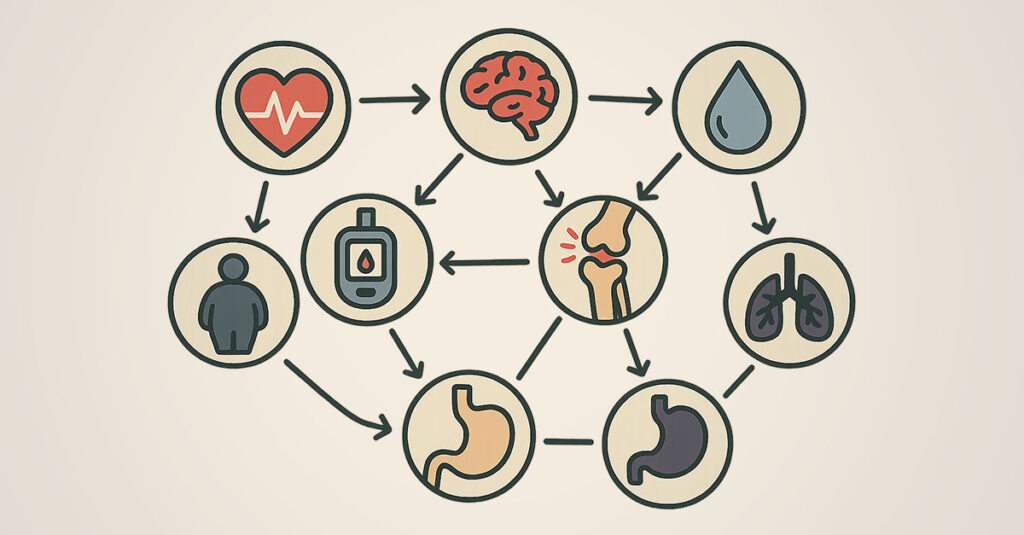
Veterans with multiple disabilities benefit from using VA Form 21-4138 to explain relationships between conditions, cumulative effects, and overall functional limitations that individual condition ratings may not fully capture. This coordination prevents pyramiding issues while ensuring all functional impacts receive appropriate consideration.
Multiple conditions often interact in ways that aren’t obvious from individual medical records. Statements can explain how conditions combine to create greater limitations than the sum of their parts.
According to VA rating regulations, avoiding pyramiding by clearly explaining how different conditions cause distinct functional limitations matters. The goal is demonstrating that the same limitation isn’t being claimed twice but rather showing how multiple conditions affect different aspects of life.
Describing worst days when multiple conditions flare simultaneously helps raters understand cumulative impact that individual condition ratings might not capture.
Explaining how treating one condition affects others provides important context. Medications, physical therapy, or lifestyle modifications for one disability might worsen symptoms of another condition.
Documenting how multiple conditions affect the ability to work matters. Even if individual conditions might not prevent employment, their combination might make sustained work impossible.
Example of Combined Effects: A veteran with PTSD, chronic pain, and diabetes might explain: “PTSD medications cause drowsiness that worsens concentration problems. When back pain flares, exercise becomes impossible, which raises blood sugar levels. The combination means working maybe 2-3 hours before needing extended breaks, making full-time employment impossible.”
How REE Medical Coordinates Medical Documentation
Form 21-4138 statements can be accompanied by comprehensive medical documentation. REE Medical connects veterans with independent, licensed medical providers who are familiar with disability-focused documentation and VA-standardized forms, and who can provide objective clinical information that may be submitted along with written testimony for the VA to review.
Veterans may wish to learn more about how the VA disability rating process works and what options exist within the VA system when written statements describe functional limitations that they believe are not reflected in their current ratings. Veterans should consult directly with the VA, accredited representatives, or legal counsel for guidance on claim strategy or appeals.
REE Medical’s internal processes are designed to promote neutrality and transparency while operating consistently with applicable laws and regulations, including 38 U.S.C. §§ 5901–5905. REE Medical coordinates independent medical evaluations that generate detailed clinical documentation which veterans may choose to reference in VA Form 21-4138 statements or to submit as part of their claims. REE Medical does not prepare, present, or submit VA disability claims and does not provide legal, medical, or representational services.
Whether a veteran is explaining complex symptom patterns, describing functional limitations, or outlining service-related timelines in Form 21-4138, having current, comprehensive medical documentation from REE Medical’s nationwide network of independent providers can help ensure that written statements are supported by professional medical observations and clinical findings. The VA, however, is solely responsible for determining what weight to give any evidence and how that evidence affects disability ratings or benefit decisions.
Through REE Medical’s streamlined process and flat-rate pricing structure, veterans can obtain independent medical evaluations and related documentation to accompany Form 21-4138 statements without hidden fees or long-term commissions. The combination of detailed personal testimony and objective medical documentation may help create a more complete evidentiary record for the VA to review as part of a disability claim, but it does not guarantee any particular outcome.
Veterans who would like to learn more about coordinating professional medical documentation to accompany VA Form 21-4138 can contact REE Medical for a complimentary informational consultation about how independent medical evaluations are arranged. These consultations are educational in nature and are not a substitute for legal advice, medical care, or assistance from an accredited representative. Visit REE Medical’s website or call to schedule an informational consultation.
Final Thoughts
VA Form 21-4138 represents one of the most underutilized yet powerful tools in the veteran disability claims process. Written statements carry the same legal weight as sworn testimony and become permanent parts of VA files, making every word count toward current claims and all future disability-related decisions.
The key to success lies in strategic preparation and factual presentation. Veterans who take time to gather supporting documentation, organize narratives chronologically, and focus on specific functional limitations rather than general complaints consistently achieve better outcomes. Statements should bridge the gap between clinical medical records and the daily reality of living with service-connected disabilities.
VA raters look for consistency between written testimony and existing medical evidence. Contradictions raise red flags, while detailed explanations that align with documented symptoms strengthen overall cases. The most effective statements provide specific examples of how conditions affect work capacity, relationships, and daily activities rather than simply listing symptoms.
Electronic submission through VA.gov offers the fastest processing and best tracking capabilities, but traditional mail remains viable for veterans who prefer handwritten statements. Regardless of submission method, keeping detailed records of what was submitted and when becomes crucial if questions arise during processing or appeals.
For complex cases involving multiple conditions, secondary claims, or appeals, Form 21-4138 becomes even more critical. These situations require sophisticated explanation of condition relationships, cumulative effects, and functional limitations that standard forms simply cannot capture. Professional medical documentation from providers who understand VA standards significantly strengthens these complex written statements.
DISCLAIMER: REE Medical, LLC is not a Veterans Service Organization (VSO) or a law firm and is not affiliated with the U.S. Veterans Administration (“VA”). Results are not guaranteed, and REE Medical, LLC makes no promises. REE Medical’s staff does not provide medical advice or legal advice, and REE Medical is not a law firm. Any information discussed, such as, but not limited to, the likely chance of an increase or service connection, estimated benefit amounts, and potential new ratings, is solely based on past client generalizations and not specific to any one patient. The doctor has the right to reject and/or refuse to complete a Veteran’s Disability Benefit Questionnaire if they feel the Veteran is not being truthful. The Veteran’s Administration is the only agency that can make a determination regarding whether or not a Veteran will receive an increase in their service-connected disabilities or make a decision on whether or not a disability will be considered service-connected. This business is not sponsored by, or affiliated with, the United States Department of Veterans Affairs, any State Department of Military and Veterans Affairs, or any other federally chartered veterans service organization.