
VA Benefits for Spouse: Understanding Military Family Support Programs
With approximately 20 million households—representing 15.4% of the nation’s households—having at least one veteran present, understanding VA spouse benefits has become crucial for military families nationwide. According to the Census Bureau’s Survey of Income and Program Participation, about 600,000 households without a veteran present received military compensation in 2017, predominantly survivor households. These benefits represent a vital safety net for military spouses and surviving family members who have sacrificed alongside their veteran partners.
This guide provides a comprehensive overview of the VA benefits for spouse programs available to military families. From healthcare coverage through CHAMPVA to educational opportunities and home loan programs, military spouses can access numerous support systems designed to recognize their service alongside their veteran partners.
TL;DR
- Military spouses qualify for comprehensive benefits including healthcare through CHAMPVA, educational programs, home loans (for surviving spouses), and financial support like DIC payments
- Same-sex marriages receive full federal recognition for all VA spouse benefits, regardless of state of residence
- CHAMPVA provides extensive healthcare coverage for spouses of totally disabled veterans, with annual deductibles and catastrophic caps protecting beneficiaries from excessive costs
- GI Bill transfers require veterans to commit to additional service time and must be completed while on active duty
- Surviving spouses can access VA home loans without down payments when specific service-connected or disability rating criteria are met
- Caregiver programs offer monthly stipends, healthcare coverage, and respite services for spouses caring for disabled veterans
- Proper documentation is required—certified marriage certificates, veteran disability rating letters, and service records are commonly part of VA benefit applications.
- REE Medical coordinates independent medical documentation for veterans, which may be reviewed by the VA as part of disability evaluations that can affect spousal benefit eligibility.
Understanding Spouse Eligibility and Core Benefits
Military spouse benefits represent a comprehensive support system designed to recognize the sacrifices and challenges faced by families serving our country. Understanding eligibility status and the full scope of available benefits forms the foundation for accessing the support military families have earned through their service.
Who Actually Qualifies as a Military Spouse for VA Benefits
The VA maintains specific criteria that determine spouse eligibility, encompassing legal marriage requirements, documentation standards, and special circumstances that can significantly impact benefit status and access to military family support programs.
Legal Marriage Requirements That Matter
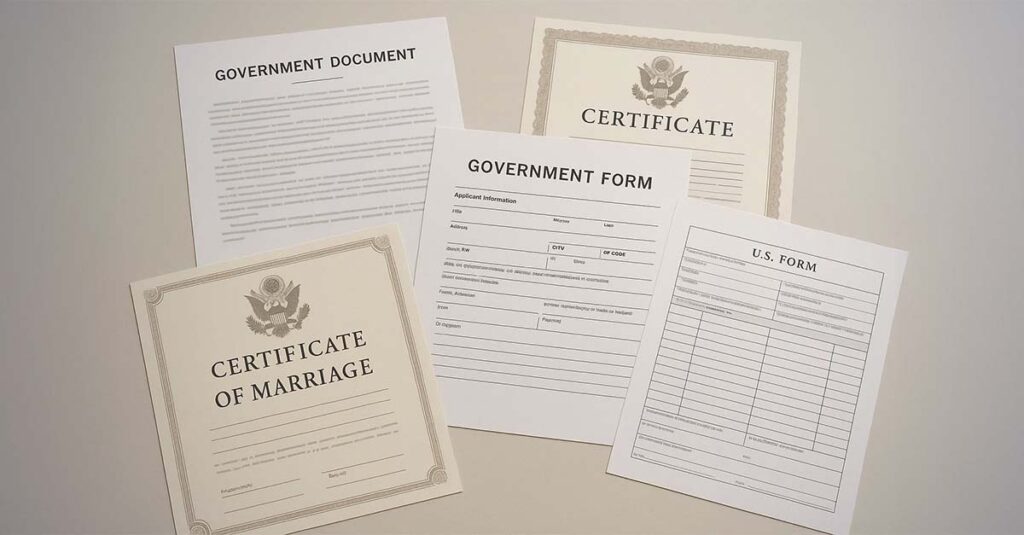
Establishing legal spouse status requires certified marriage certificates that meet VA verification standards. A certified marriage certificate—not just a photocopy from a wedding album—serves as the cornerstone of every benefit application. The VA requires official documentation that proves legal marriage status.
Common-law marriages receive recognition, but only when the state legally acknowledges these unions. The VA does not create marriage recognition where none exists legally. Documentation standards matter more than expected—marriage certificates must be certified, legible, and issued by the appropriate government authority. Wedding certificates from religious ceremonies alone do not suffice.
When Remarriage Changes Everything
Surviving spouses face a crucial decision point at age 57. Remarriage before this age typically results in loss of survivor benefits. Remarriage after age 57 allows maintenance of certain benefits while starting a new chapter of life.
The rules shift when marrying another veteran. These marriages can preserve some benefits that would otherwise terminate, creating opportunities for blended military families to maintain support systems.
Same-Sex Marriage Recognition Across All States
State position on same-sex marriage does not affect VA benefits for spouse eligibility. Federal recognition means full spousal benefits regardless of residence location, eliminating geographic discrimination in benefit access.
Retroactive eligibility can mean significant back payments. Legal marriage before applying for benefits means eligibility dates back to the marriage date, not the application date. This recognition extends to all benefit categories—healthcare, education, home loans, and survivor benefits.
Understanding how a veteran spouse’s disability rating affects eligibility is crucial. Veteran disability ratings are one factor the VA considers when determining spouse benefit eligibility across programs. Building meaningful connections with other veterans and their families can provide essential support during this process—community matters in the importance of connection for veterans.
The Full Spectrum of Spouse Benefits Available
Military spouses access a comprehensive range of benefits including healthcare through CHAMPVA, educational opportunities, home loan programs, and financial support systems designed to provide security and opportunity throughout military life and beyond.
| Benefit Category | Primary Programs | Eligibility Requirements | Key Features |
| Healthcare | CHAMPVA, TRICARE Reserve Select | Veteran 100% disability rating or qualifying service | Comprehensive medical coverage, prescription benefits |
| Education | GI Bill Transfer, Chapter 35 | Active duty transfer or veteran disability status | Tuition, housing allowance, book stipend |
| Home Loans | VA Loan Guarantee | Surviving spouse status, service-connected criteria | No down payment, no PMI, competitive rates |
| Financial Support | DIC, Caregiver Stipends | Service-connected death or caregiving role | Monthly tax-free payments, healthcare coverage |
| Burial Benefits | National Cemetery, Headstones | Veteran eligibility extends to spouse | Burial plot, perpetual care, memorial markers |
Healthcare Coverage That Actually Works for Military Spouses
Healthcare benefits for military spouses center around CHAMPVA and alternative programs that provide comprehensive medical coverage, with specific enrollment processes, coverage scopes, and cost-sharing structures designed to ensure accessible healthcare for military families.
CHAMPVA Coverage That Goes Beyond Basic Healthcare
CHAMPVA offers extensive healthcare coverage through a structured program that requires specific application procedures, provides comprehensive medical services with defined limitations, and operates under a cost-sharing system that protects beneficiaries from excessive medical expenses.
Getting Enrolled Without the Runaround
VA Form 10-10d serves as the gateway to CHAMPVA coverage. This application requires detailed information about marriage, veteran spouse disability status, and any other health insurance coverage maintained. Supporting documentation is required for application review —certified marriage certificates, veteran spouse disability rating letters, and proof of any other health insurance coverage are all required. Missing documentation may delay processing.
Processing times average 6-8 weeks for complete applications. Incomplete applications take much longer, so gathering all required documentation before submitting saves time and frustration during enrollment.
CHAMPVA Application Checklist:
- Completed VA Form 10-10d
- Certified marriage certificate
- Veteran’s disability rating letter (100% rating required)
- Proof of other health insurance (if applicable)
- Birth certificate (certified copy)
- Social Security card
- Government-issued photo ID
- Divorce decree from previous marriage (if applicable)
What CHAMPVA Actually Covers
Hospital care coverage includes inpatient services, emergency room visits, and surgical procedures. CHAMPVA covers the medical services needed when health issues arise. Prescription medication coverage manages ongoing health conditions and acute medical needs, including both generic and brand-name medications when medically necessary.
Preventive care coverage supports ongoing health maintenance through routine checkups, screenings, and immunizations. This coverage promotes staying healthy rather than just treating illness after it occurs.
Exclusions include cosmetic procedures, experimental treatments, and services available through VA facilities. Understanding these limitations supports planning for healthcare needs that fall outside CHAMPVA coverage.
Healthcare access proves crucial for military families. According to the Census Bureau’s Survey of Income and Program Participation, half of survivors were covered under military health care programs in 2017, demonstrating the vital role these benefits play in maintaining family health security.
Understanding Out-of-Pocket Costs
CHAMPVA operates under a cost-sharing structure with annual deductibles and percentage-based payments for services. Catastrophic caps limit total out-of-pocket expenses to protect beneficiaries from excessive medical costs.
| CHAMPVA Cost Structure | Individual | Family |
| Annual Deductible | $50 | $100 |
| Outpatient Cost Share | 25% after deductible | 25% after deductible |
| Inpatient Cost Share | $0 after deductible | $0 after deductible |
| Catastrophic Cap | $3,000 | $3,000 |
| Prescription Copay | $12 generic / $30 brand | $12 generic / $30 brand |
Alternative Healthcare Options for Different Situations
TRICARE Options for Reserve and Guard Families
Reserve and Guard families often qualify for TRICARE programs that provide different coverage options than CHAMPVA. These programs recognize the ongoing military connection through reserve service commitments. Premium structures for TRICARE Reserve Select differ significantly from CHAMPVA’s cost-sharing approach, with monthly premiums for coverage rather than deductible and percentage-based systems.
Limited VA Medical Center Access
While spouses cannot access routine VA medical care directly, specific services including mental health counseling and caregiver support programs provide crucial assistance for spouses caring for disabled veterans. Mental health counseling services recognize the unique stresses military spouses face. Caregiver support programs offer practical assistance when caring for a disabled veteran spouse.

Educational Opportunities Beyond the GI Bill Transfer
Educational benefits for military spouses encompass transferred GI Bill benefits with specific eligibility requirements and usage guidelines, independent programs designed specifically for military families, and scholarship opportunities that support career development and academic advancement.
Making the Most of GI Bill Transfers
Transfer Requirements Veterans Must Meet
Six years of completed service represents the minimum threshold for GI Bill transfers. Veterans must have already served this time before becoming eligible to transfer benefits to family members. The four-year additional service commitment represents a requirement for benefit transfer eligibility—not optional.
Active duty transfer processing means benefit transfers cannot wait until after separation. The paperwork and approval process must occur while the veteran spouse remains on active duty status. Benefit usage extends beyond traditional college degrees to include vocational training, certification programs, and professional development courses when offered through VA-approved institutions.
Time Limits and Usage Rules That Matter
The 15-year usage window starts when the veteran spouse separates from military service. This timeline creates urgency for educational planning and program completion, especially for longer degree programs. Thirty-six months of benefits represents the maximum available, regardless of how many family members receive transfers.
VA-approved institutions and programs determine where transferred benefits can be used. Not all schools or training programs qualify, so researching approval status before enrolling is important.
Example: Maria’s Strategic Education Planning
Maria’s husband transferred 18 months of his GI Bill benefits to her before separating from the Army. She strategically used these benefits to complete a nursing program at a VA-approved community college, then applied the remaining months toward her BSN at a state university. By timing her education around their family’s PCS moves and using the housing allowance effectively, she maximized the $45,000 in benefits while building a portable career that supports their military lifestyle.
Independent Programs Designed for Military Spouses
Chapter 35 Benefits for Eligible Spouses
Chapter 35 eligibility does not depend on veteran spouse transferring benefits. This program provides independent educational assistance based on veteran spouse disability status or service-connected death. Veterans with 100% permanent and total disability ratings qualify their spouses for Chapter 35 benefits. Service-connected death creates immediate Chapter 35 eligibility for surviving spouses.
Program benefits include monthly housing allowances and book stipends in addition to tuition coverage. This comprehensive support covers the full cost of educational pursuits.
Scholarship Programs That Recognize Military Sacrifice
Military Spouse Education Partnership connects spouses with scholarship opportunities specifically designed for military families. These programs understand the unique challenges military spouses face in pursuing education. Operation Homefront scholarships provide financial assistance that complements federal educational benefits, often covering expenses that federal benefits don’t address, like childcare during classes or technology needs.

Home Loan Benefits for Surviving Spouses
VA home loan benefits extend to surviving spouses under specific circumstances related to veteran service-connected death or disability ratings, providing access to favorable mortgage terms including no down payment requirements and competitive interest rates.
Understanding Surviving Spouse Loan Eligibility
When Service-Connected Death Qualifies Surviving Spouses
Spouses of veterans who died from service-connected disabilities automatically qualify for VA loan benefits regardless of veteran service length or disability rating at time of death. Service-connected death creates automatic VA loan eligibility for unmarried surviving spouses.
Length of service does not matter when death is service-connected. Whether the veteran spouse served four years or twenty, service-connected death qualifies surviving spouses for VA loan benefits. Disability rating at death becomes irrelevant for service-connected deaths.
Non-Service Connected Death Requirements
When veteran death is not service-connected, surviving spouses must meet additional requirements including veteran 100% disability ratings for specified periods before death or veteran death while receiving VA compensation. Additional documentation requirements apply when death is not service-connected.
According to Census Bureau data, about 7% of survivors utilize VA loans. These loan programs offer crucial homeownership opportunities with no down payment requirements and competitive interest rates for qualifying surviving spouses.
Loan Features That Make Homeownership Possible
Zero Down Payment and PMI Advantages
Eligible surviving spouses can purchase homes without down payments up to VA loan limits while avoiding private mortgage insurance requirements. This significantly reduces upfront costs and monthly payment obligations compared to conventional mortgages. PMI elimination saves hundreds of dollars monthly compared to conventional loans with small down payments.
Refinancing and Future Flexibility Options
Streamlined refinancing options allow taking advantage of lower interest rates without extensive paperwork. The VA’s Interest Rate Reduction Refinance Loan (IRRRL) simplifies the refinancing process significantly. Assumable loans allow qualified buyers to take over VA loans when selling a home, making properties more attractive to buyers when interest rates rise.

Navigating Applications Without the Headaches
Successfully accessing VA benefits for spouse programs requires understanding specific application procedures, essential documentation requirements, and strategic timing considerations that can streamline approval processes and maximize available resources.
Essential Documentation That Makes or Breaks Applications
Marriage and Identity Verification Requirements
Certified marriage certificates serve as the cornerstone of every spouse benefit application. Photocopies do not suffice—official documents proving legal marriage status are required. Birth certificates establish identity and citizenship status for benefit eligibility. Social Security cards and government-issued identification complete the identity verification package.
Name changes require additional documentation connecting current identity to previous names. Previous marriages need documentation showing their legal termination through divorce decrees or death certificates of former spouses.
Veteran Service and Disability Documentation
DD-214 forms provide the foundation for proving veteran status and service history. Disability rating letters from the VA show current disability percentages and service-connected conditions. These documents determine eligibility for many spouse benefits and benefit amounts. Service medical records support disability claims and establish the connection between military service and current health conditions.
Many families face challenges understanding documentation requirements that can delay or deny spouse benefits, making proper preparation crucial for successful applications.
Essential Documentation Checklist:
- Certified marriage certificate (not photocopy)
- Birth certificate (certified copy)
- Social Security card
- Government-issued photo ID
- Veteran’s DD-214 (all copies)
- Current VA disability rating letter
- Previous marriage termination documents (if applicable)
- Name change documentation (if applicable)
- Death certificate (for survivor benefits)
- Service medical records (when required)
Application Timing Consideration
Immediate vs. Long-term Benefit Applications
DIC applications are typically submitted following a qualifying event. Retroactive payments date back to the month after the veteran spouse’s death, as retroactive payment rules are determined by the VA. Healthcare benefit applications need immediate attention when losing other coverage—CHAMPVA enrollment takes 6-8 weeks, so applying before losing current coverage prevents gaps in healthcare access.
Educational benefits offer more timing flexibility, allowing strategic planning when using transferred GI Bill benefits to coordinate with career transitions, family obligations, and other life events. Home loan benefits do not expire, allowing application when ready to purchase a home.
Example: Jennifer’s Timeline Strategy
When Jennifer’s husband received his 100% disability rating, she immediately applied for CHAMPVA to replace her expensive private insurance. Six months later, she strategically timed her college enrollment to maximize transferred GI Bill benefits during their stable assignment period. By applying for benefits in the right sequence and timing her education around their military obligations, she reduced out-of-pocket healthcare costs based on program eligibility.

Caregiver Support When You Need It Most
The VA provides extensive caregiver support through comprehensive assistance programs for post-9/11 veterans and general support services for all eras, offering financial assistance, healthcare coverage, training, and respite care for military spouses managing caregiving responsibilities.
Comprehensive Assistance for Intensive Caregiving
Qualifying for the Highest Level of Support
Caregivers must complete mandatory training, pass background checks, and demonstrate caregiving ability. Veterans must have qualifying injuries requiring assistance with daily activities or supervision due to neurological impairments from post-9/11 service.
Training requirements ensure caregivers are prepared for caregiving responsibilities. The VA provides comprehensive training covering medical care, safety procedures, and stress management techniques. Background checks protect vulnerable veterans by ensuring caregivers meet safety standards.
Monthly Stipends and Healthcare Coverage
Approved caregivers receive monthly tax-free stipends based on geographic location and required care levels, plus comprehensive healthcare coverage through CHAMPVA when not otherwise insured. Geographic adjustments ensure stipend amounts reflect local cost of living differences. Care level assessments determine stipend amounts based on the intensity and complexity of required caregiving.
Training and Mental Health Support Systems
Mandatory training covers essential caregiving skills including medical procedures, emergency response, and safety protocols. Ongoing education opportunities support developing advanced caregiving skills and staying current with best practices. Mental health counseling services recognize the emotional toll of caregiving, with professional counselors understanding the unique stresses military caregivers face.
General Support Services for All Military Caregivers
Respite Care That Provides Relief
Temporary relief services allow caregivers to take necessary breaks from caregiving responsibilities through in-home care, adult day programs, and short-term institutional care options. In-home respite care brings qualified caregivers to the home, allowing time for appointments, errands, or personal time. Adult day programs provide structured activities and supervision for veterans who can participate in group settings.
Support Groups and Professional Counseling
Peer support groups connect caregivers with others in similar situations. Individual counseling offers personalized support for specific caregiving challenges, with professional counselors helping develop coping strategies and maintain emotional wellbeing. Family counseling addresses how caregiving affects entire family systems.

Burial and Memorial Benefits for Final Peace of Mind
Surviving spouses receive comprehensive burial benefits and memorial services through national cemetery burial options, headstone and marker provisions, and various memorial recognition programs ensuring dignified final arrangements.
Cemetery and Burial Services That Honor Service
National Cemetery Burial Rights
Spouses can be buried alongside eligible veterans in national cemeteries at no cost, with services including grave opening and closing, grave liners, and perpetual care of gravesites in dignified memorial settings. No-cost burial services include all necessary cemetery services, eliminating financial stress during difficult times.
Headstones and Markers for Lasting Memorials
The VA provides headstones or markers for spouses buried in national, state, or private cemeteries, with inscription options including names, dates, and relationship designations. Marker styles accommodate different preferences and cemetery requirements, including traditional upright headstones and flat markers.
Memorial Recognition Programs
Presidential Memorial Certificates and Flag Programs
Surviving family members can request Presidential Memorial Certificates signed by the current president and receive American flags through presentation ceremonies, providing formal recognition and meaningful symbols of military service appreciation. Certificate and flag requests can be made by surviving family members at any time—there is no deadline for requesting these memorial items.
Special Circumstances That Complicate Everything
Unique situations in VA spouse benefits require special consideration, including complex marriage histories, international complications for overseas spouses, and documentation authentication requirements that can significantly impact benefit processing.

Complex Marriage Situations That Require Extra Documentation
Previous Marriage Documentation Requirements
Spouses with previous marriages must provide divorce decrees or death certificates of former spouses to establish current marriage validity. Divorce decrees must be final and certified to prove previous marriage termination. Common-law marriage recognition varies significantly by state and historical time period, creating complex documentation requirements.
When Multiple People Claim Spouse Status
Concurrent claims for spouse status trigger VA investigations to determine legal marriage validity, creating significant processing delays. These investigations examine marriage documentation, timing, and legal validity to determine rightful benefit eligibility. Investigation outcomes determine benefit eligibility for all parties involved.
International Considerations for Overseas Spouses
Overseas Benefit Limitations and Alternatives
Some benefits like CHAMPVA have limited overseas coverage. Understanding these geographic restrictions supports planning healthcare access when living abroad. Alternative healthcare options may be necessary when living in countries with limited CHAMPVA coverage.
Documentation Authentication for Foreign Documents
Foreign marriage certificates and supporting documents require authentication through U.S. consulates or apostille processes. U.S. consulate authentication provides official verification of foreign marriage certificates for VA benefit applications. Apostille processes offer alternative authentication for documents from countries participating in the Hague Convention.
Example: David and Elena’s International Challenge
When David, a U.S. veteran, married Elena in Germany, they needed to authenticate their German marriage certificate for VA spouse benefits. The process required obtaining an apostille from German authorities, then having the document translated by a certified translator in the U.S. This authentication process took four months and cost $800, but ultimately secured Elena’s eligibility for CHAMPVA benefits and other spouse programs, demonstrating the importance of proper international documentation procedures.
How REE Medical Supports Your Family’s Benefit Journey
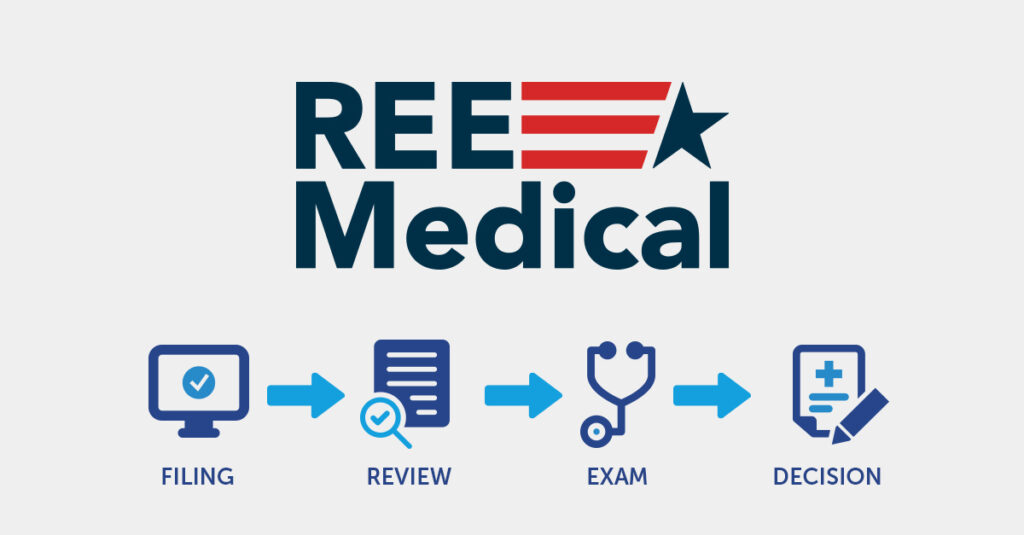
While spouses cannot directly receive VA disability ratings, REE Medical provides medical documentation coordination services by connecting veterans with experienced, independent medical providers who understand VA evaluation standards. The veteran spouse’s VA disability rating is used by the VA when determining eligibility for certain spouse benefits. Certain disability ratings may be associated with eligibility for programs such as CHAMPVA or Chapter 35 benefits, as determined by the VA.
REE Medical coordinates access to independent, licensed healthcare professionals who complete Disability Benefits Questionnaires (DBQs) and medical evaluations. Providers are familiar with disability-focused documentation and VA-standardized forms. This objective medical documentation may be reviewed by the VA as part of its evaluation process.
Accurate disability ratings impact the entire military family’s financial security and healthcare access. When the VA has thorough medical documentation that clearly reflects service-connected conditions, the evaluation process can proceed with complete information—which the VA may consider when reviewing benefit eligibility.
Understanding current VA disability compensation rates from the Department of Veterans Affairs allows families to plan their financial future and understand how rating increases directly impact spouse benefit eligibility and monthly compensation amounts.
REE Medical’s compliance framework ensures neutrality, transparency, and adherence to federal regulations (38 U.S.C. §§ 5901–5905). REE Medical does not prepare, present, or submit VA disability claims and does not provide legal or representational services. REE Medical’s role is limited to coordinating independent, objective medical evaluations and documentation within full legal and ethical boundaries.
For military families, this service becomes particularly valuable because veteran disability ratings serve as the foundation for spousal benefit eligibility. Accurate, thorough documentation allows the VA to clearly understand the veteran’s diagnosis, symptoms, and treatment history.
Learn more about independent medical documentation and how the VA reviews medical evidence. Contact REE Medical for information about coordinating independent medical documentation.

Frequently Asked Questions
What is the primary healthcare benefit available for military spouses?
According to the VA, CHAMPVA (Civilian Health and Medical Program of the Department of Veterans Affairs) provides comprehensive healthcare coverage for spouses of veterans with 100% permanent and total service-connected disability ratings. Per VA guidance, this program covers hospital care, physician services, prescription medications, and preventive care with annual deductibles and catastrophic caps limiting out-of-pocket expenses.
How does a veteran’s disability rating affect spouse benefits?
Per VA policy, the veteran’s disability rating directly impacts spousal benefit eligibility across multiple programs. A 100% permanent and total disability rating qualifies spouses for CHAMPVA healthcare and Chapter 35 educational benefits. According to the VA, higher ratings can also affect the financial support available to surviving spouses through DIC payments.
What documentation is required for spouse benefit applications?
According to the VA, spouse benefit applications require certified marriage certificates, birth certificates, Social Security cards, government-issued identification, veteran DD-214 forms, and current disability rating letters. Per VA guidance, previous marriages require termination documentation, and foreign documents need authentication through U.S. consulates or apostille processes.
Can same-sex spouses receive VA benefits?
According to federal law and VA policy, same-sex marriages receive full recognition for all VA spouse benefits regardless of state of residence. Per VA guidance, retroactive benefit eligibility dates back to the legal marriage date, and this recognition extends to all benefit categories including healthcare, education, home loans, and survivor benefits.
What happens to survivor benefits if a surviving spouse remarries?
Per VA guidance, remarriage before age 57 typically results in loss of survivor benefits including DIC payments. According to the VA, remarriage after age 57 allows maintenance of certain benefits. Per VA policy, marriage to another veteran can create exceptions to standard termination rules for some benefits.
Final Thoughts
VA benefits for spouse programs represent a comprehensive support system that recognizes the sacrifices and challenges faced by military families throughout service and beyond. Understanding eligibility, understanding application requirements, and accessing available resources can significantly impact family financial security, healthcare access, and educational opportunities.
Military spouse benefits extend far beyond basic support—they represent recognition of family service commitment and the unique challenges military families face. From comprehensive healthcare through CHAMPVA to educational opportunities and home loan benefits for surviving spouses, these programs provide crucial support during military life transitions and beyond.
Access to these benefits depends on meeting VA eligibility criteria and submitting required documentation. Each program has specific eligibility criteria and application processes, but the investment in understanding these requirements pays dividends in benefit access and family security.
Military families have earned these benefits through service, and understanding how to access them effectively ensures families receive the support designed to honor their sacrifices and provide security for their future. Whether currently navigating military life or transitioning to civilian status, these benefits remain available to support family ongoing needs and goals.
Disclosure
DISCLAIMER: REE Medical, LLC is not a Veterans Service Organization (VSO) or a law firm and is not affiliated with the U.S. Veterans Administration (“VA”). Results are not guaranteed, and REE Medical, LLC makes no promises. REE Medical’s staff does not provide medical advice or legal advice, and REE Medical is not a law firm. Any information discussed, such as, but not limited to, the likely chance of an increase or service connection, estimated benefit amounts, and potential new ratings, is solely based on past client generalizations and not specific to any one patient. The doctor has the right to reject and/or refuse to complete a Veteran’s Disability Benefit Questionnaire if they feel the Veteran is not being truthful. The Veteran’s Administration is the only agency that can make a determination regarding whether or not a Veteran will receive an increase in their service-connected disabilities or make a decision on whether or not a disability will be considered service-connected. This business is not sponsored by, or affiliated with, the United States Department of Veterans Affairs, any State Department of Military and Veterans Affairs, or any other federally chartered veterans service organization.